
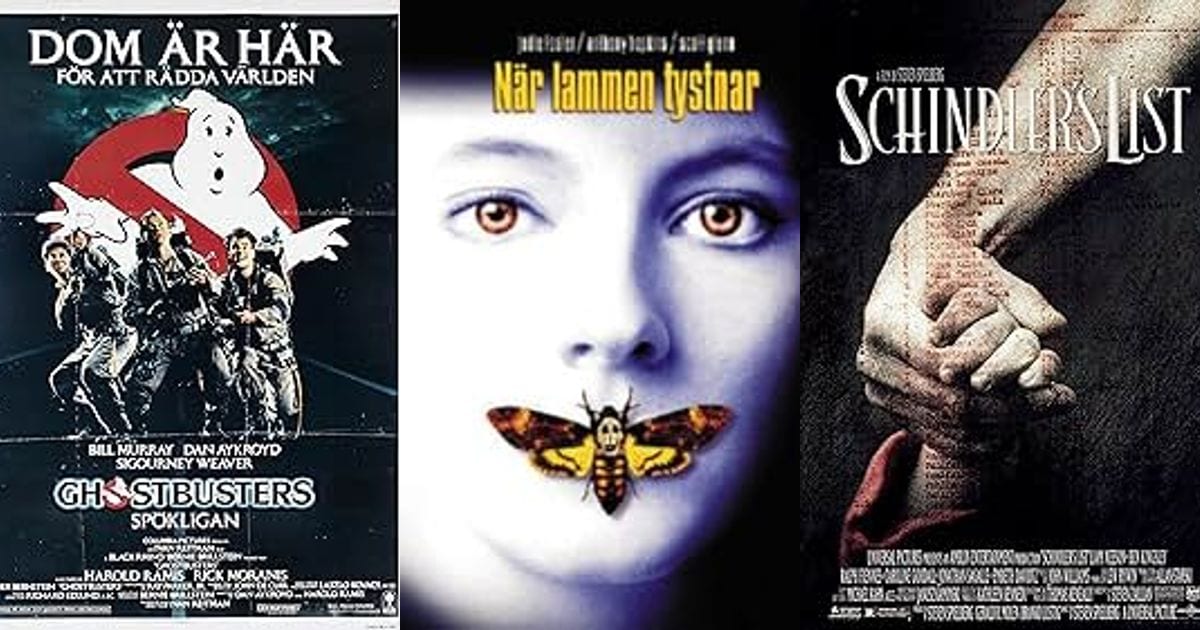
The Moment Before You Know You Know
There's a very specific flavor of joy that happens about half a second before you can actually explain why. A wall of colored squares sits on the screen, looking like nothing so much as a crime scene photo of a bag of Skittles, and then — click — a shape resolves out of the noise. A jawline. A neon skyline. A single, unmistakable red balloon. You didn't consciously "solve" the image. Your brain just quietly handed you the answer and let you take the credit.
That flash of recognition is the entire engine behind guessing-games built on degraded images, and it's also one of the more delightful quirks of human vision. We are, it turns out, spectacularly good at recognizing things from almost nothing — and spectacularly bad at explaining how we did it. Underneath the fun of a trivia night, there's a surprisingly rich chunk of psychology and neuroscience explaining why a handful of colored blocks can feel like a complete picture. It's also, not coincidentally, the exact mechanic behind the site's own Pixel Perfect game, which spends five rounds slowly proving the point.
Your Brain Is a Prediction Machine, Not a Camera
The first thing to understand is that your visual system was never built to be a faithful recorder of pixels. It was built to answer one question as fast as possible: what is this, and is it dangerous, edible, or worth chasing? Evolution did not reward the ancestor who waited for a perfectly resolved, high-fidelity image before deciding whether the shape in the grass was a rustling bush or a leopard. It rewarded the one who guessed early and correctly, using whatever fragments of information were available.
That bias toward fast, confident guessing is formalized in what psychologists call Gestalt principles — a set of rules, mapped out nearly a century ago, describing how the brain organizes fragments into wholes. Concepts like closure (mentally completing a shape whose outline is only partially drawn), proximity (grouping nearby elements together as a single object), and similarity (treating same-colored or same-shaped blobs as belonging to one thing) aren't just textbook trivia. They are, quite literally, the reason a heavily pixelated poster doesn't look like static to you. Your brain sees a cluster of muddy orange squares roughly where a face should be, and it doesn't report "cluster of orange squares." It reports "face," fills in the missing eyes and nose from memory and expectation, and moves on.
This is also why pattern completion tends to happen in a rush rather than a slow fade. Recognition is less like a dimmer switch and more like a light switch: your confidence stays low and flat for a while as your brain tests hypotheses against sparse data, and then it flips, often startlingly, into "oh, it's that one" the instant enough evidence stacks up. If you've ever watched an image sharpen during a round and felt nothing right up until the second everything clicked at once, that's the switch — not a coincidence, but the whole point.
Blurry but Not Useless: The Secret Life of Low-Resolution Information
It's tempting to think of a pixelated image as "missing" information, the way a redacted document is missing words. But a heavily blocked-out image isn't a blank — it's a filtered one, and it's still carrying an enormous amount of usable signal. Vision scientists describe images in terms of spatial frequency: the fine, crisp detail (individual strands of hair, the texture of stubble, the serifs on a logo) lives in high spatial frequencies, while the broad shapes, overall lighting, and color blocking live in low spatial frequencies. Pixelation is, in effect, a low-pass filter. It strips out the fine detail while leaving the coarse structure almost entirely intact.
And it turns out the brain doesn't actually need the fine detail nearly as much as intuition suggests. Low spatial-frequency information gets processed extremely quickly by the visual system, arguably faster than the fine detail does, and it's enough on its own to support a rough classification of a scene almost instantly — is this a face, a landscape, a city street, a monster. Color survives pixelation particularly well, since color is essentially a low-frequency property to begin with; a chunky mosaic of mustard yellows and browns still reads as "desert," and a mosaic of teal and orange (Hollywood's favorite color grade) still reads as "big-budget action movie" well before any actor's face becomes legible.
Fun fact: the human visual system can categorize the gist of an entire scene — indoor versus outdoor, city versus nature, day versus night — in roughly 100 to 150 milliseconds, which is faster than it takes most people to consciously register that they've looked at anything at all.
So when a heavily pixelated poster still feels "readable" in some vague sense long before you can name the movie, that's not you being unusually perceptive. That's low spatial frequency information doing exactly what it's built to do: giving you the gist while withholding the details, right up until the reveal catches up with your guess.
Why Some Posters Give Themselves Away Early
None of this happens evenly across every image, though, which is why some rounds feel unfairly easy and others feel like an act of cruelty. The posters that get guessed fastest tend to share a few traits, and none of them have much to do with how famous the movie is.
High color contrast is the biggest one. A poster built around two or three saturated, clashing colors survives pixelation beautifully, because contrast is exactly the kind of coarse information a low-pass filter preserves. A silhouette does even more work: a single dark, high-contrast shape against a bright background (a caped figure on a rooftop, a cowboy hat against a sunset, a shark fin against blue water) is basically Gestalt psychology's favorite test case, since figure-ground separation — telling an object apart from its background — is one of the very first things the visual system computes, long before any fine detail is available.
Iconic, oft-repeated imagery adds a second boost on top of the visual one: familiarity. If you've seen a poster's color palette and composition dozens of times, in trailers, on merchandise, on a friend's wall, your brain isn't starting from zero when a fragment of it shows up pixelated. It's pattern-matching against a stored template, which is a much easier task than recognizing something genuinely novel. This is part of why blockbusters with instantly recognizable branding tend to get called earlier than a beautifully shot but visually quieter drama — it's not that one poster is more "guessable" in some objective sense, it's that one of them you've already half-memorized.
Faces are their own special case, and worth a brief detour, because human face recognition doesn't work the way most people assume. Rather than checking off individual features one by one — nose shape, eye spacing, mouth width — the brain processes faces holistically, as a single integrated pattern, weighing the relationships between features almost as much as the features themselves. That's part of why a poster with a recognizable face pixelated can suddenly "snap" into place well before any single feature is sharp: you're not identifying a nose, you're recognizing a whole configuration, and configurations survive blur far better than fine detail does.
Inside Pixel Perfect: How the Game Turns Vision Science Into a Race
All of which is a fairly convenient way of explaining why Pixel Perfect works the way it does, since the game is essentially a structured experiment in exactly this phenomenon, dressed up as movie trivia. Each round takes a real movie poster and renders it on a canvas that starts heavily obscured and gradually de-pixelates in real time, revealing more of the underlying image the longer the round runs. You're given four multiple-choice options and a countdown clock, and the job is simple: name the movie before the clock runs out, ideally before the image reveals so much that anyone could get it.
There are five rounds per game, and the scoring rewards exactly the kind of fast, confident pattern completion this whole article has been describing — answer correctly early, while the image is still mostly noise, and you score more points than someone who waits for near-total clarity. Consecutive correct answers stack bonus points on top of that, so a streak is worth chasing deliberately rather than as an afterthought, and a full run across all five rounds can add up to as much as 5,000 points if you're both fast and right.
The three difficulty levels essentially dial the low-pass filter described earlier. Easy starts with roughly 60% of the image hidden, leaving a decent amount of coarse structure — color blocking, big shapes, rough silhouettes — visible from the first frame. Medium ramps that up to about 80% hidden, trimming things down closer to color and gist alone. Hard starts at roughly 95% hidden, which is close to the theoretical edge of what the Gestalt-and-spatial-frequency toolkit can work with: you're left relying almost entirely on color palette, coarse contrast, and whatever memory of the poster you've already got stored away, with the fine detail only arriving in the image's final moments. Each level then reveals more detail as the round progresses, so even a Hard round eventually hands you enough information to guess correctly — the only question is how much of the clock you're willing to burn waiting for it.
How to Actually Get Better at Guessing Almost Nothing
Given all that, a few practical habits genuinely help, and none of them require memorizing more movie posters (though it doesn't hurt).
Look for color first, shape second, and don't bother hunting for faces until the image is well underway. Since color and coarse silhouette are the most pixelation-resistant properties an image has, they're also the most reliable early signal — a distinctive palette or a recognizable outline will almost always resolve before any legible facial detail does, so training your eye to scan for those first, rather than squinting for a nose or a logo, will consistently shave time off your guesses.
Trust the flash, don't fight it. Because recognition tends to arrive as a sudden switch rather than a gradual dawning, the correct answer often shows up as a strong hunch well before you can consciously justify it. Hesitating to "make sure" usually just burns clock time waiting for confirmation your brain already gave you.
Play the genre odds. Certain color grades and compositions correlate strongly with certain genres — the teal-and-orange of modern action tentpoles, the desaturated grays of prestige dramas, the high-saturation primaries common in animated family films — and reading genre off the palette alone can narrow four multiple-choice options down to one or two before a single shape becomes legible.
And finally, accept that Hard mode is supposed to feel uncomfortable. Starting at roughly 95% hidden pixels means you are, by design, being asked to operate near the actual edge of what low spatial-frequency vision can support. Getting a Hard-difficulty round right in the first couple of seconds isn't just lucky guessing — it's your visual system doing genuinely impressive, ancient, leopard-in-the-grass work, and it's worth appreciating even when the streak eventually breaks.
The Point of the Game Was Never the Pixels
Strip away the countdown clock and the streak bonuses, and what's left is a small, satisfying demonstration of just how much of "seeing" actually happens behind the scenes, before conscious attention even shows up to take a bow. Gestalt closure fills the gaps. Low spatial frequency carries the gist. Holistic face processing recognizes a whole configuration instead of a checklist of features. None of that is exotic or speculative — it's decades of well-established vision science, doing exactly what it evolved to do, just aimed at a movie poster instead of a leopard in tall grass.
So the next time a wall of muddy squares resolves into a face or a skyline half a second before you expected it to, that flash isn't a fluke and it isn't cheating. It's your brain running a very old trick very well. If you'd like to watch it happen in real time, on the clock, with points on the line, the posters are waiting — and the leopard-in-the-grass instinct that's been running your visual system since long before movies existed is more than ready for the challenge.
How to Host a Movie Quiz Night (With a Free 40-Question Quiz)
The format, the timing, the scoring, and the four mistakes that sink most home quizzes — plus a complete 40-question movie quiz with answers, ready to run tonight.
Movie Drinking Games That Will Absolutely Get You Too Drunk
A tongue-in-cheek guide to drinking games built around the most repetitive movies and genres of all time, with a serious note on keeping the whole thing fun and safe.
Six Degrees of Kevin Bacon: How Small Hollywood Actually Is
The parlor game that turned Kevin Bacon into a punchline is secretly a lesson in graph theory — and it's the exact idea behind our Degrees of Separation game.