
Most home quizzes fail for the same four reasons
They are too long. The questions are too hard. The scoring is done at the end, so nobody knows whether they are in it. And the person who wrote the quiz does not get to play, which means the one who cares most about it has the least fun.
All four are fixable, and none of the fixes require effort on the night. Here is the format that works, followed by a complete forty-question quiz you can run as-is.
The format
- Four rounds of ten. Forty questions is about ninety minutes with marking and interruptions — roughly one social evening. Fifty starts to sag; thirty ends before people have settled in.
- Teams of two or three. Solo players lose badly and quietly. Pairs argue their way to answers, and the arguing is most of the entertainment.
- Mark after every round. Swap answer sheets between teams, read the answers out, and update a visible scoreboard. A running score is what keeps people trying in round three.
- One point per answer, no half points, one tiebreak at the end. Every extra scoring rule costs you five minutes of debate you will not get back.
- Vary the round types. Straight trivia, then something visual, then something lateral. Four rounds of the same shape is where attention goes.
Timing that actually holds
- 0:00 — teams form, names on sheets. Give this five minutes; the team names are worth it.
- 0:05 — round one. Read each question twice, then move on regardless.
- 0:20 — swap and mark. Read the answers with a little ceremony.
- 0:30 — rounds two and three, same rhythm.
- 1:10 — round four, then the tiebreak.
- 1:25 — final scores. Stop there. Quizzes should end while people still want another round.
The quiz: 40 questions with answers
Written for a mixed room, spanning the 1930s to the present, and deliberately front-loaded with questions almost everyone gets.
Round 1: Openers
- Which 1972 crime film starring Marlon Brando won Best Picture? The Godfather
- Who directed Jaws, E.T. and Jurassic Park? Steven Spielberg
- Which 1977 space adventure launched the biggest franchise in cinema? Star Wars
- Which 2009 James Cameron film is the highest-grossing of all time? Avatar
- Who played Captain Jack Sparrow? Johnny Depp
- Which animation studio made Toy Story? Pixar
- Which 2019 Marvel film closed out the Infinity Saga? Avengers: Endgame
- Who directed Inception and Interstellar? Christopher Nolan
- Which South Korean film won Best Picture in 2020? Parasite
- Who played Hermione Granger? Emma Watson
Round 2: Name the Director
- Pulp Fiction Quentin Tarantino
- Psycho and The Birds Alfred Hitchcock
- Goodfellas Martin Scorsese
- Spirited Away Hayao Miyazaki
- Do the Right Thing Spike Lee
- Alien (1979) Ridley Scott
- The Shining Stanley Kubrick
- Get Out Jordan Peele
- Lost in Translation Sofia Coppola
- The Dark Knight Christopher Nolan
Round 3: Numbers in Titles
The round people enjoy most, because everyone can have a go.
- How many Angry Men? 12
- How many Dalmatians, in the original title? 101
- How many Samurai, in Kurosawa's film? Seven
- Ocean's how many, in the 2001 remake? Eleven
- The Hateful how many? Eight
- How many Dwarfs live with Snow White? Seven
- The blank Sense — which number? Sixth
- How many Weddings, and a Funeral? Four
- Apollo which number? 13
- District which number? 9
Round 4: Firsts
- What was the first Pixar feature film? Toy Story
- What was the first film in the Marvel Cinematic Universe? Iron Man
- What was the first Harry Potter film? Harry Potter and the Philosopher's Stone
- What was the first James Bond film? Dr. No
- Which Star Wars film was released first? A New Hope
- What was Disney's first feature-length animated film? Snow White and the Seven Dwarfs
- What was the first Lord of the Rings film? The Fellowship of the Ring
- What was the first Fast & Furious film called? The Fast and the Furious
- In what year was the first Toy Story sequel released? 1999
- Which 1934 film was the first to win Best Picture, Director, Actor, Actress and Screenplay? It Happened One Night
Tiebreak
Closest wins, no conferring: in what year was Disney's Snow White and the Seven Dwarfs released? (1937)
The four mistakes, and what to do instead
- Too hard, too early. If a team scores two out of ten in round one they have mentally left. Make round one the round everybody enjoys, and put the cruelty in round three.
- Marking at the end. Without a visible scoreboard between rounds, nobody knows whether the next round matters. Mark as you go, out loud.
- Rounds that are all the same shape. Four straight trivia rounds is a test. Trivia, then names, then wordplay, then a lateral round is a game.
- The host cannot play. This is the real one, and it is why so many people only host once.
Prizes, and why they matter more than they should
A quiz with no prize is a test. A quiz with a prize — any prize — is a competition, and people behave completely differently.
The size is irrelevant and arguably counterproductive. Something valuable makes people cautious and turns disputes serious. What works is something small and slightly ridiculous: a trophy that has to be returned next time, a chocolate orange, the right to choose the film afterwards. The last one is genuinely the best prize for a film quiz, because it keeps mattering after the quiz has finished.
Award a wooden spoon too. The team that comes last has done as much work as the team that came first, and a booby prize turns a bad night for them into a bit they will retell.
Picking a theme without narrowing the room
Themed quizzes are more memorable than general ones, but the theme has to be broad enough that nobody is locked out. A useful test: can every person in the room name at least five films that fit?
- Good themes: a decade, a genre, "films set in one city", "films with a number in the title", "book adaptations". All of them are wide enough that everyone has a way in.
- Bad themes: one director, one franchise, one country's cinema. These are fine for a room of enthusiasts and miserable for anyone else, and you usually cannot tell which room you have until round two.
- The safest structure: a general quiz with one themed round. You get the memorability without the exclusion, and the themed round doubles as the natural place to put the hard questions.
Running it when people are not in the same room
Remote quizzes are worse than in-person ones and always will be — the interruptions and the arguing are most of the entertainment, and video calls destroy both. Three things make the difference between tolerable and unbearable:
- Halve the length. Two rounds, not four. Attention over a video call is roughly half what it is in a room.
- Never ask people to unmute to answer. Answers go in the chat, or into a shared document, one line per team.
- Read the answers out yourself. Do not go round the group asking each team how they did; it takes four times as long and everybody watches their own face while it happens.
How to host without sitting it out
The last mistake is the only one you cannot fix with better questions, because somebody has to hold the answers. The way round it is to let a game hold them instead.
Our Classic trivia game deals ten multiple-choice questions against a clock and marks itself, so nobody has to read anything out. If you want the competitive part, a challenge gives everyone the same frozen rounds — the identical questions, in the identical order — and works out the placings, so the host plays like everyone else and the scoreboard is not anyone's opinion.
It also solves the other quiet problem with a home quiz: the friend who could not make it. A challenge link can be played the next day and still counts.
What to keep from the paper version
Not everything is better automated. Keep the team names, keep the marking ceremony, and keep at least one round read aloud — preferably the lateral one, where the pause between the question and the laugh is the whole point. Automation is good at scoring and terrible at timing a joke.
FAQ
How many questions should a quiz night have?
Forty, in four rounds of ten. That is roughly ninety minutes including marking, which is one evening without anyone checking their phone.
How long should a movie quiz take?
Ninety minutes end to end. Read each question twice, allow about twenty seconds, and mark between rounds rather than at the end.
What is the best team size for a quiz?
Two or three. Larger teams have passengers, and solo players get beaten badly enough that they stop trying by round two.
How do I make a quiz fair when one person is a huge film buff?
Split them from the other strong player, and include at least one round that rewards recognition rather than recall — posters, plot summaries, or ordering films by box office. Encyclopaedic recall does not help nearly as much on those.
Do I need a projector or a screen?
No. Every round above works read aloud. A screen only becomes necessary for picture rounds, and a phone passed round the table covers that perfectly well.
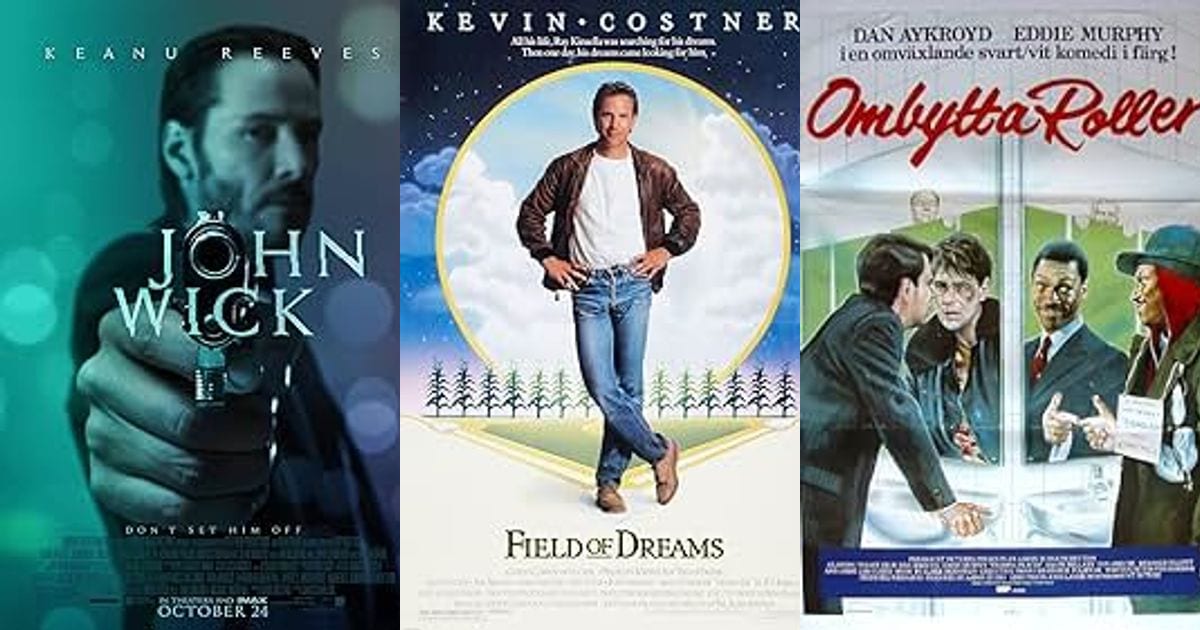
Guess the Film From a Terrible Plot Summary: 30 Questions With Answers
Thirty films described as unhelpfully as possible, with answers. The rare quiz where being wrong is funnier than being right — and no film knowledge is wasted.
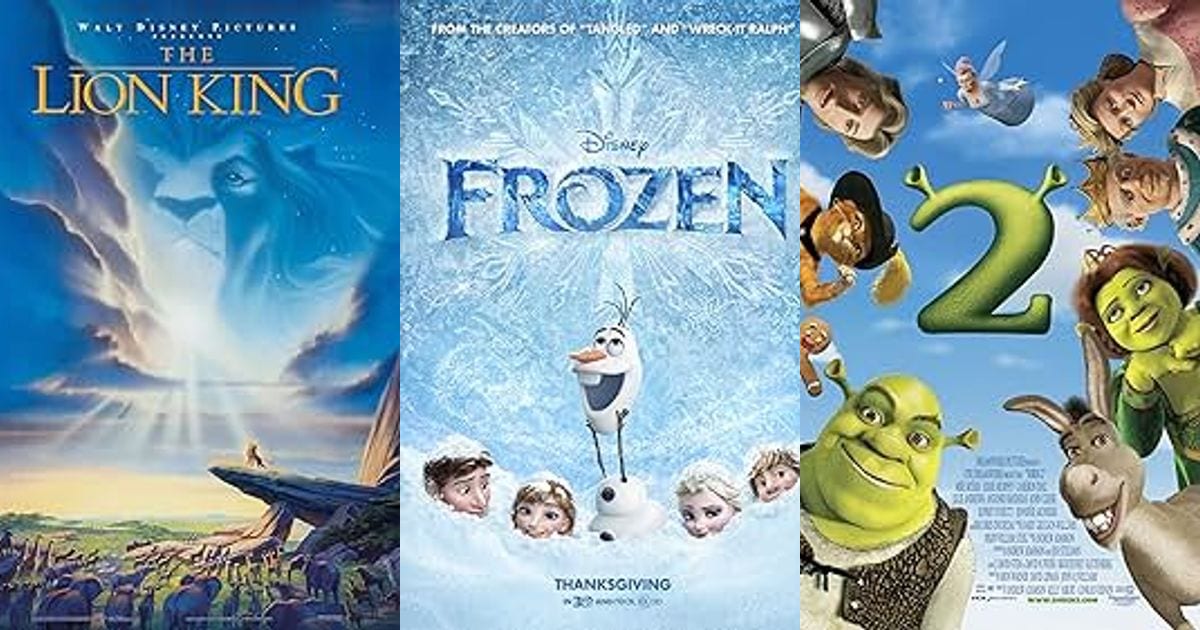
Emoji Movie Quiz: 40 Puzzles (With Answers) to Play With Friends
Forty emoji film puzzles, sorted easy to fiendish, with every answer listed at the end of its round. Paste them into a group chat or read them off the screen.
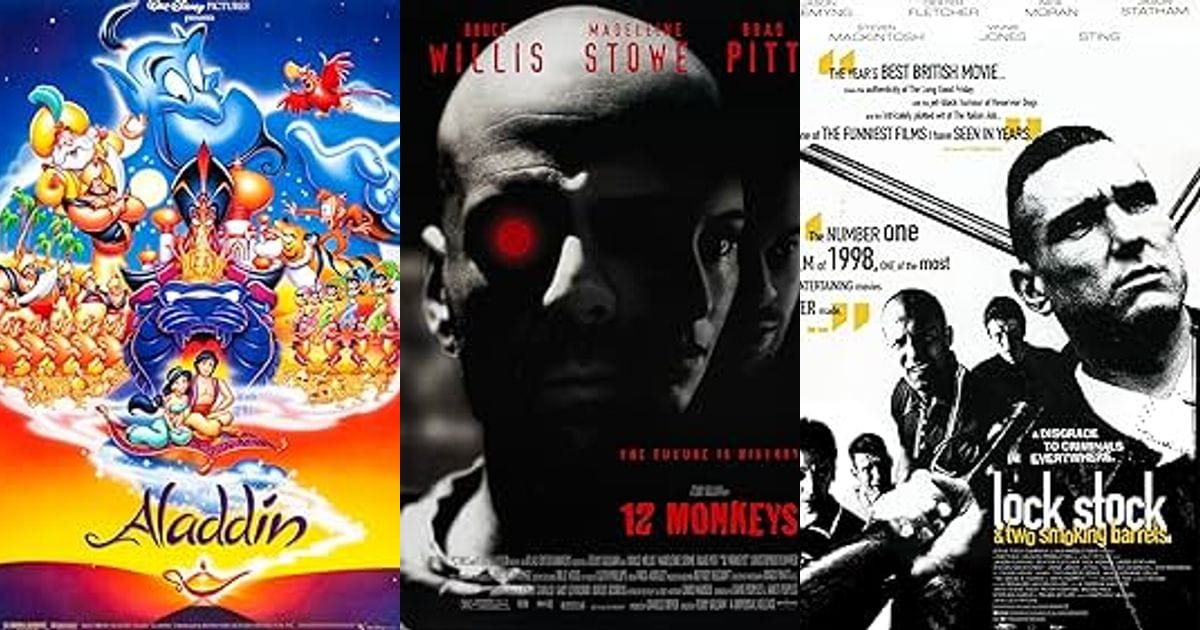
The 90s Movie Quiz: 50 Questions and Answers for Your Next Night In
Five rounds, fifty questions, every answer included — a ready-to-run 90s movie quiz you can read straight off the screen. No prep, no printing, no cheating.