
The Joke That Became a Science Experiment
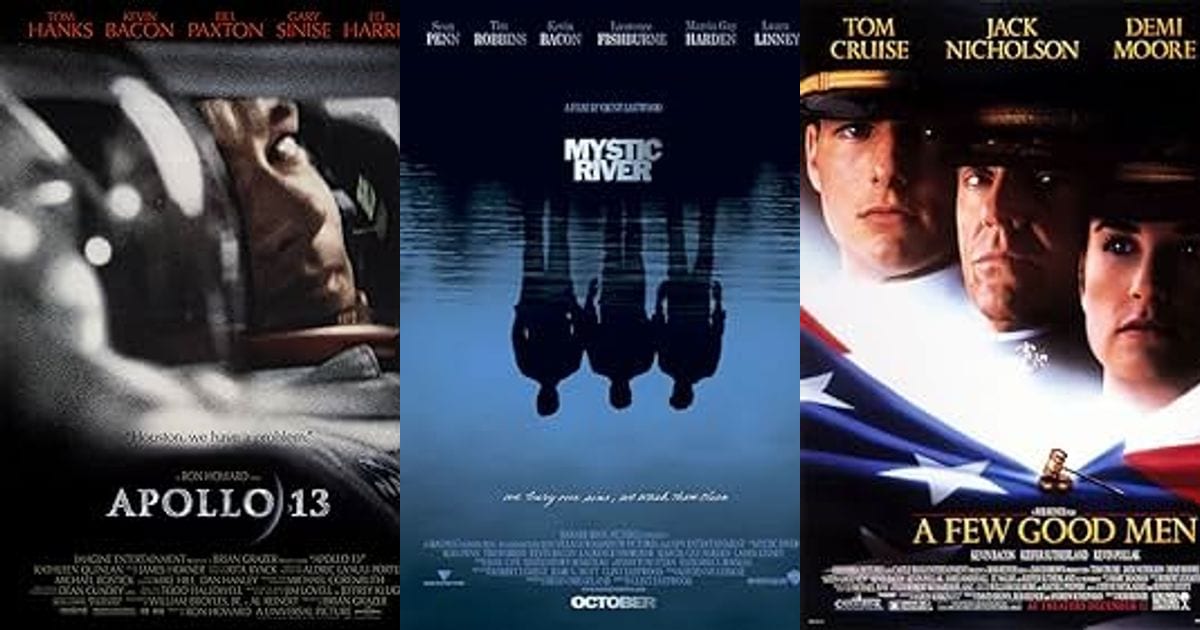
In the fall of 1994, three college students at Albright College were doing what college students do at 2am: watching bad cable movies and making fun of them. Craig Fass, Brian Turtle, and Mike Ginelli had just sat through a Kevin Bacon double feature — Footloose one night, Quicksand: No Escape the next — and somewhere in the haze of it all, they landed on a bit. Kevin Bacon, they joked, was in everything. You could connect him to any actor in Hollywood in a handful of hops, just by tracing who starred with whom.
What started as a dorm-room riff turned into a party game, then a fax campaign to talk shows, then an actual appearance on The Jon Stewart Show, and eventually a bestselling trivia book. Three decades later, it's a phrase most movie fans know even if they've never played it properly: Six Degrees of Kevin Bacon. It's silly. It's also, buried underneath the silliness, a surprisingly solid piece of applied math — the same math that shows up in epidemiology, social networks, and a much older, much nerdier game about a Hungarian mathematician. Let's dig into where it came from, why Bacon specifically got stuck with the title, and how that same idea now powers our own Degrees of Separation game.
Three Guys, One VCR, and a Ridiculous Bet
The origin story checks out, and it's better than most internet legends because it's actually true. Fass, Turtle, and Ginelli were watching Kevin Bacon movies back to back and started noticing the same names cropping up in the supporting casts. Someone from Footloose had been in a movie with someone who'd been in a movie with someone who'd been in a movie with Kevin Bacon. It became a running bit: name any actor, and they'd try to connect them to Bacon in a chain of shared films.
They wrote a letter to a local paper about it, then to The Jon Stewart Show, where they got a segment and coined the phrase "Six Degrees of Kevin Bacon" on the spot — a deliberate nod to the older "six degrees of separation" idea about how everyone on Earth is connected through a short chain of acquaintances. The bit landed. A publisher signed them for a book, Six Degrees of Kevin Bacon, published in 1996, and the game spread the old-fashioned way: word of mouth, bar trivia nights, and eventually the early internet, which was exactly the kind of medium built for a game about connecting nodes in a network.
The most important thing to understand about the origin is that it was never meant as a compliment. It wasn't "Kevin Bacon is the most important actor in Hollywood." It was closer to a gentle roast — the guy is in so much stuff that connecting him to anyone is basically trivial. Bacon himself has said as much over the years, leaning into the joke with good humor rather than fighting it, which probably did more than anything else to keep the meme alive for thirty-plus years.
What a "Bacon Number" Actually Measures
Once the game had a name, it needed rules, and the rules turned out to be clean enough to formalize. Your Bacon Number is the number of movies it takes, at minimum, to connect you to Kevin Bacon through shared cast lists.
- If you were in a movie with Kevin Bacon, your Bacon Number is 1.
- If you were in a movie with someone who was in a movie with Bacon, but never with Bacon directly, your Bacon Number is 2.
- And so on, counting the shortest possible chain — because there might be several routes, and only the shortest one counts.
Bacon himself, naturally, has a Bacon Number of 0. Most working actors in American film land somewhere between 1 and 3, which is precisely the point the original joke was making: Hollywood is a small enough industry, and Bacon had worked in a wide enough range of genres and budgets by the mid-90s — indies, studio pictures, ensemble dramas, horror — that he'd brushed up against an enormous slice of the acting community. It's less that he's special and more that he's a very well-connected hub in a network that's already tightly wound.
That's actually the more interesting and more accurate version of the story than the one people tell casually. Kevin Bacon isn't uniquely central to Hollywood — researchers who've actually run the numbers on movie databases have found plenty of actors with lower average distances to the rest of the industry. He just happened to be the guy three film students were watching that particular week, and the name had the right rhythm for a game (try saying "Six Degrees of Donald Sutherland" and you'll see the problem). Bacon became the mascot for a real structural feature of the film industry — high connectivity through overlapping casts — largely by chance of timing and a name that scanned well as a punchline.
Fun fact: Kevin Bacon eventually turned the joke into a real charity. In 2007, he co-founded SixDegrees.org, using the "everyone is connected" premise of his own meme to link celebrities and causes for charitable giving — proving the bit had enough gravitational pull to raise actual money.
The Much Older, Much Nerdier Version: Erdős Numbers
Here's the part that tends to surprise people: the Bacon game wasn't even the first version of itself. Mathematicians had been playing an almost identical game since the 1960s, except the hub of their network wasn't an actor — it was Paul Erdős, one of the most prolific and eccentric mathematicians of the twentieth century.
Erdős published or co-authored something like 1,500 papers across his career, working with an enormous, sprawling network of collaborators as he travelled the world with a suitcase, staying with mathematician after mathematician and producing joint papers wherever he landed. Mathematicians started tracking their Erdős number: 1 if you co-authored a paper directly with him, 2 if you co-authored with someone who co-authored with him, and so on. It's the exact same structure as a Bacon Number — same math, different network, and it predates the movie version by roughly three decades.
Both games are really just informal, human-scale demonstrations of something graph theory had already proven: real-world social and professional networks tend to be "small world" networks. That's a specific technical term, not just a saying. In a small-world network, most nodes aren't directly connected to each other, but you can get from any node to any other node in a surprisingly small number of hops, because a handful of highly-connected hub nodes — the Kevin Bacons and Paul Erdőses of the network — link otherwise-distant clusters together. It's the same underlying structure behind the famous "six degrees of separation" claim about human acquaintanceship in general, and the same math that shows up in how diseases spread through contact networks, how information travels through social media, and how power grids or neural networks are wired. Hollywood's cast-list network, it turns out, is a textbook example, with directors, prolific character actors, and yes, Kevin Bacon, acting as the connective hubs.
There's even a hybrid stat for people who wanted to combine both jokes: your Erdős–Bacon number, the sum of your Erdős number and your Bacon number, achievable only if you've both co-authored a math paper and appeared in a film credited alongside someone in Bacon's network. A small, delightful club of actual scientists-turned-actors (and actors who dabbled in published research) hold a finite Erdős–Bacon number, which is exactly the kind of nerdy crossover trivia this whole concept was destined to produce.
How Degrees of Separation Turns This Into a Game
This is exactly the mechanic our own Degrees of Separation game is built on, except we generalized it so it isn't only ever about Kevin Bacon. Instead, each round hands you a start actor and a target actor, and your job is to connect them through a chain of shared films — building your own bridge across the network, one co-star at a time, the same way Fass, Turtle, and Ginelli were doing it with a notepad and a VCR remote.
A full game runs five rounds, but unlike our other games, there's no per-round timer ticking down. Instead there's a single shared 10-minute clock for the entire game, so you can spend as long as you like puzzling over a tricky pair early on and make it up with quick solves later, or vice versa.
Before each round starts, you pick a difficulty, and the difficulty controls exactly how far apart the two actors are guaranteed to be:
- Easy pairs actors who are just 1 step apart — meaning they co-starred together directly in at least one film. You're mostly confirming a connection rather than hunting for one.
- Medium pairs actors who are 1–2 steps apart, so you might get a direct co-starring pair or you might need exactly one intermediate actor to bridge the gap.
- Hard pairs actors who are 2–4 steps apart, which is where the game starts to feel like real detective work — you're reasoning through supporting casts and lesser-known credits to find the thread connecting two actors who, on the surface, look like they've never been within a mile of each other's filmographies.
Scoring rewards efficiency, exactly the way a real Bacon Number does: the shortest possible chain is the "optimal" one, and your score is based on how close you get to it. Each difficulty has its own base score — 500 for Easy, 750 for Medium, and 1000 for Hard — and that base scales down the more extra steps your chain takes compared to the optimal chain. Find the tightest possible connection and you bank the full base score; take a longer, roundabout route through extra films and actors, and your score shrinks proportionally. On top of that, there's a small penalty for every wrong guess along the way, so guessing wildly costs you even if you eventually land on a valid chain. The upshot is that the game isn't just testing whether you can connect two actors — it's testing whether you can find the shortest path, which is the actual heart of what a Bacon Number or an Erdős number is measuring.
Why This Trivia Actually Sharpens Your Movie Brain
Playing a few rounds of Degrees of Separation does something that a straightforward trivia quiz doesn't: it forces you to think about actors as nodes in a web rather than as isolated facts to memorize. You start noticing patterns — which actors show up again and again in ensemble casts, which decades or genres cluster together, which character actors quietly show up everywhere and turn out to be the real hubs of the network, doing for their corner of the industry exactly what Kevin Bacon did for his. That's a genuinely different kind of movie knowledge than remembering release years or box office numbers, and it tends to stick better because you're building a mental map instead of a flashcard deck.
It also means the game never gets stale in the way a fixed trivia bank can. Because the connections are generated from the underlying web of real co-starring relationships rather than a hand-written list of questions, every pairing is a fresh little puzzle, and the "aha" moment of finding the connecting thread between two actors is the same little dopamine hit that made three bored college students turn a joke about Kevin Bacon into a cultural fixture that's outlasted most of the movies that inspired it.
Go Prove the Small World Theory Yourself
The wildest part of this whole story is that a joke about a mid-tier 90s movie star accidentally became one of the most accessible, hands-on demonstrations of small-world network theory in pop culture — no math degree required, just a decent memory for supporting casts and a willingness to squint at a filmography. Erdős would probably have found it funny that his own decades-old academic in-joke ended up with a Hollywood cousin more famous than the original. If you want to see whether Hollywood really is as small as everyone claims, the best way isn't to read about it — it's to open up our Degrees of Separation game, get handed two actors who seem to have nothing in common, and start tracing the thread between them. Set the clock, pick your difficulty, and go find out just how few steps it really takes.
How to Host a Movie Quiz Night (With a Free 40-Question Quiz)
The format, the timing, the scoring, and the four mistakes that sink most home quizzes — plus a complete 40-question movie quiz with answers, ready to run tonight.

Movie Drinking Games That Will Absolutely Get You Too Drunk
A tongue-in-cheek guide to drinking games built around the most repetitive movies and genres of all time, with a serious note on keeping the whole thing fun and safe.

Guess That Movie: Why Your Brain Is So Bad (and So Good) at Pixelated Posters
Why can you sometimes name a movie from a wall of colored squares before a single detail is visible? The real psychology and vision science behind pattern recognition, and how Pixel Perfect turns it into a race against the clock.