
The Theater in Your Pocket
Remember Blockbuster? Driving over on a Friday night, hoping the new release wasn't out of stock, arguing with your family for twenty minutes in the New Releases aisle before settling on something nobody really wanted? That world is gone. Streaming giants — Netflix, Amazon, Disney+, Max — have reshaped not just how we watch movies, but what movies get made at all. It's the biggest disruption since television first pulled families away from the picture palace in the 1950s, and arguably bigger, because television never asked cinema to hand over its entire distribution model. Streaming did, and cinema mostly said yes.
To understand how total the shift has been, it helps to remember how recently "going to rent something" was still a ritual. Video stores gave way to Redbox kiosks and mail-order DVDs, which gave way to on-demand cable, which gave way to apps on a smart TV that now open faster than the disc tray on a PS3 ever did. Each step removed a little more friction, and friction, it turns out, was doing more work than anyone gave it credit for. When it took effort to watch something, you thought harder about what you chose. When it takes zero effort, you scroll for fifteen minutes and land on a rerun of a sitcom you've already seen four times. That's not a moral failing; it's just what happens when choice becomes frictionless and infinite.
The Good: Access and New Voices
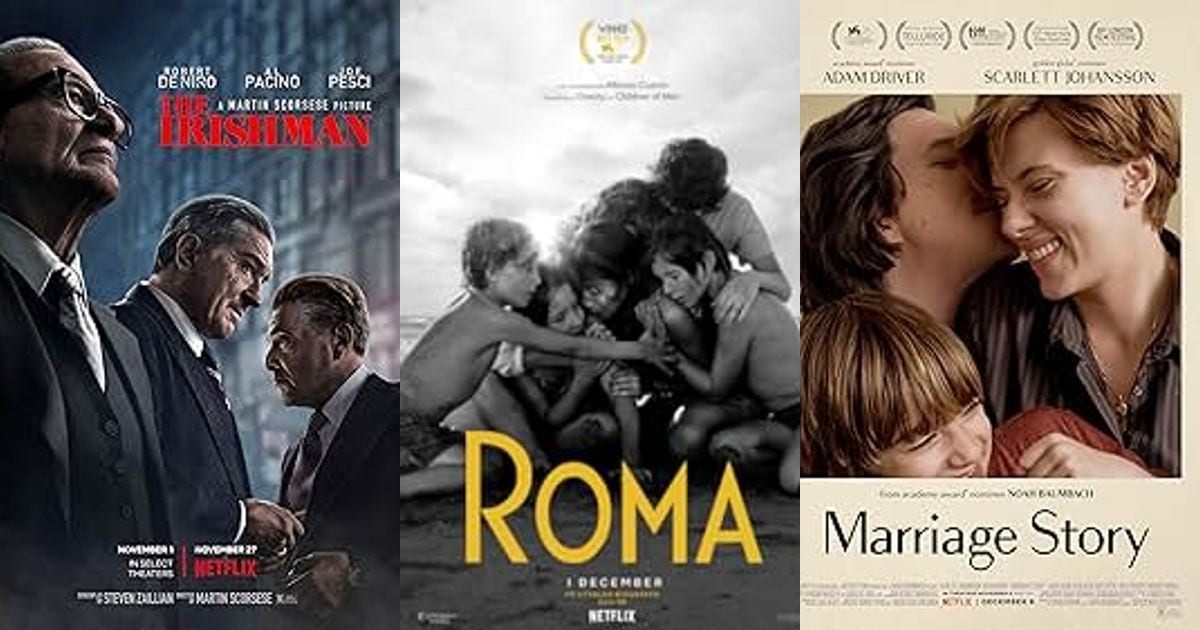
Never has this much content been available for this little money. Streaming has opened doors for the mid-budget films theaters abandoned in favor of superheroes — rom-coms, mid-tier thrillers, and niche documentaries now have a real home, and directors who'd never get a wide release finally get a platform. Netflix alone bankrolled Martin Scorsese's The Irishman, a three-and-a-half-hour gangster epic that no theatrical studio wanted to finance at its price tag, and gave Alfonso Cuarón total creative control over the black-and-white, Spanish-language Roma. Neither film fits the four-quadrant, opening-weekend logic that governs modern theatrical releases, and both found audiences anyway, on the strength of a platform rather than a marketing blitz built around ticket sales.
The same logic applies to documentaries and international titles, which used to be the hardest sell in the business. A film like My Octopus Teacher would have struggled to find theatrical distribution in an earlier era; on a streaming platform, it became a genuine cultural moment and an Oscar winner. Foreign-language television and film — Squid Game, Money Heist, an entire wave of Korean, Spanish, and Scandinavian storytelling — reached global audiences overnight instead of waiting years for a slow festival-to-arthouse pipeline. That's a real, unambiguous win for viewers who want more than what the multiplex fifteen minutes from their house is showing this week.
Streaming also changed who gets to direct in the first place. A first-time filmmaker with a strong short film and a distinctive voice has a plausible path to a deal that simply didn't exist when theatrical distribution required a marketing budget bigger than the film itself. Some of the most interesting swings of the last decade — genre experiments, formally strange dramas, uncommercial passion projects — got made because a streamer needed to fill a catalog with something other than another remake, and "something distinctive" was cheaper to justify than it used to be.
The Bad: The Death of the Shared Moment
The convenience is real, but so is the cost. The "water cooler moment" has fragmented now that everyone watches on their own timeline. Binge culture means we consume art faster and reflect on it less — often while glancing at our phones. A film that used to unfold over two carefully paced hours in a dark room, with no pause button and no second screen, now competes with a group chat, a notification banner, and the temptation to look up a plot point online mid-scene instead of trusting the story to explain itself.
The biggest open question is theaters themselves. Massive blockbusters still pack houses, but smaller dramas struggle when audiences know a film lands on their iPad in 45 days. Cinema is becoming a boutique experience for "event films," while everything else becomes feed content. A mid-budget character drama that might have run in theaters for eight weeks in 1995 now gets a token one-week theatrical release solely to qualify for awards consideration, then vanishes into a streaming library where it competes for attention with ten thousand other titles and an autoplay algorithm that mostly wants you to keep watching anything at all.
The Windowing Wars
The pandemic accelerated a fight that had already been simmering for years: how long should a film stay exclusively in theaters before it's available at home? Traditionally that window ran ninety days or more. Then, in 2021, Warner Bros. released its entire theatrical slate day-and-date on HBO Max and in cinemas simultaneously — a decision so disruptive that Scarlett Johansson sued Disney over the day-and-date release of Black Widow, arguing it undercut a contract tied to box-office performance. Disney also experimented with "Premier Access," charging a premium on top of a subscription for early home viewing of films like Mulan. These weren't small tweaks; they were studios openly renegotiating, in public and sometimes in court, what a movie ticket is even for.
The dust has settled into something like a truce: most wide releases still get a theatrical window, but it's shorter than it used to be, often somewhere between thirty and forty-five days for anything that isn't a guaranteed blockbuster. That's long enough to protect exhibitors' ability to sell popcorn and short enough to satisfy a streaming calendar that always wants fresh content. Nobody involved seems thrilled with the compromise, which is usually a sign that it's the compromise everyone's actually going to live with for a while.
The Content Treadmill
There's a language shift worth noticing, too: films and shows increasingly get referred to as "content," a catch-all term that flattens a two-hour prestige drama and a six-minute clip into the same undifferentiated stream. That's not just semantics. When a platform's core metric is watch-time and subscriber retention rather than per-title box office, decisions get made accordingly — algorithmically recommended, engagement-optimized, and occasionally cancelled without warning when the metrics don't cooperate. Finished, expensive films and shows have been quietly shelved rather than released at all, something that essentially never happened in the theatrical era, where a film that was paid for eventually had to be shown to someone.
That same logic extends to what stays available. Streaming libraries aren't static archives; they're curated, and de-curated, constantly based on licensing costs and viewership data, which means a film you loved two years ago can simply disappear from a platform overnight, re-emerge on a different one months later, or vanish from every legal streaming option entirely. Physical media collectors have started to feel less like nostalgic holdouts and more like the last line of defense for actually owning the movies they care about.
The Algorithm as Gatekeeper
There used to be a small industry of human gatekeepers between a film and its audience: a critic in the local paper, a friend at the video store counter, a programmer at the arthouse deciding what played this month. Streaming replaced most of that with a recommendation engine that has read none of the reviews and cares about none of the context, only about what keeps you scrolling and clicking for one more episode. That's efficient in a narrow sense — it's very good at guessing you'll like something similar to what you just watched — and terrible in a broader one, because it rarely pushes you toward something genuinely unfamiliar. Discovery has been quietly outsourced from curious human taste to a system optimized for retention, which is a different goal entirely, even when the two happen to overlap.
One odd side effect is that older films — the actual back catalog of cinema history — have become harder to stumble into rather than easier. A thumbnail buried six rows down a homepage competes poorly against a splashy new original with a wall of marketing behind it, so a decades-old classic can sit technically "available" while remaining practically invisible. Film culture has adapted around this in interesting ways: communities on sites like Letterboxd have picked up some of the curatorial role critics used to play, turning film discovery into something more social and peer-driven, even as the platforms hosting the actual films have gotten worse at surfacing anything beyond this week's new arrivals.
Subscription Fatigue and the Streaming Correction
The early streaming era ran on a simple pitch: pay less than a cable bill, get everything. That math stopped working once every major studio launched its own service. Suddenly the "everything" was split across five or six subscriptions, each raising prices annually, each cracking down on password sharing, each introducing a cheaper ad-supported tier to soften the blow. Consolidation followed — Discovery and WarnerMedia merged and eventually rebranded HBO Max into Max, and platforms have pulled licensed titles from competitors to hoard them for themselves. The result looks less like the promised streaming utopia and more like cable television with better search functionality and worse channel surfing.
None of that reverses the underlying shift, though. Audiences have been retrained, and retraining doesn't undo easily. Even as prices climb back toward cable-era levels, the on-demand, own-your-schedule expectation isn't going anywhere.
Think about it: when was the last time you laughed alongside 200 strangers in a packed theater? That energy doesn't translate to a couch.
Streaming isn't killing cinema — it's splitting it in two. One track chases massive, communal spectacle built for a screen the size of a wall and a sound system that rattles your ribs; the other chases everything else, optimized for a tablet propped on a pillow. The real loss is anything that used to live comfortably in the middle: the modest, well-made drama or comedy that wasn't trying to be an event and didn't need to be, just a good movie you'd stumble into on a Tuesday night because it happened to be playing. That category hasn't vanished entirely, but it's had to find a much stranger, much more crowded new home, one algorithmic recommendation away from being forgotten and one cancelled renewal away from disappearing altogether.
Why Hollywood Is Falling Back in Love With Practical Effects
Audiences got tired of weightless CGI. Here's why real stunts, models, and prosthetics are back in style.
How to Host a Movie Quiz Night (With a Free 40-Question Quiz)
The format, the timing, the scoring, and the four mistakes that sink most home quizzes — plus a complete 40-question movie quiz with answers, ready to run tonight.
Guess the Film From a Terrible Plot Summary: 30 Questions With Answers
Thirty films described as unhelpfully as possible, with answers. The rare quiz where being wrong is funnier than being right — and no film knowledge is wasted.