
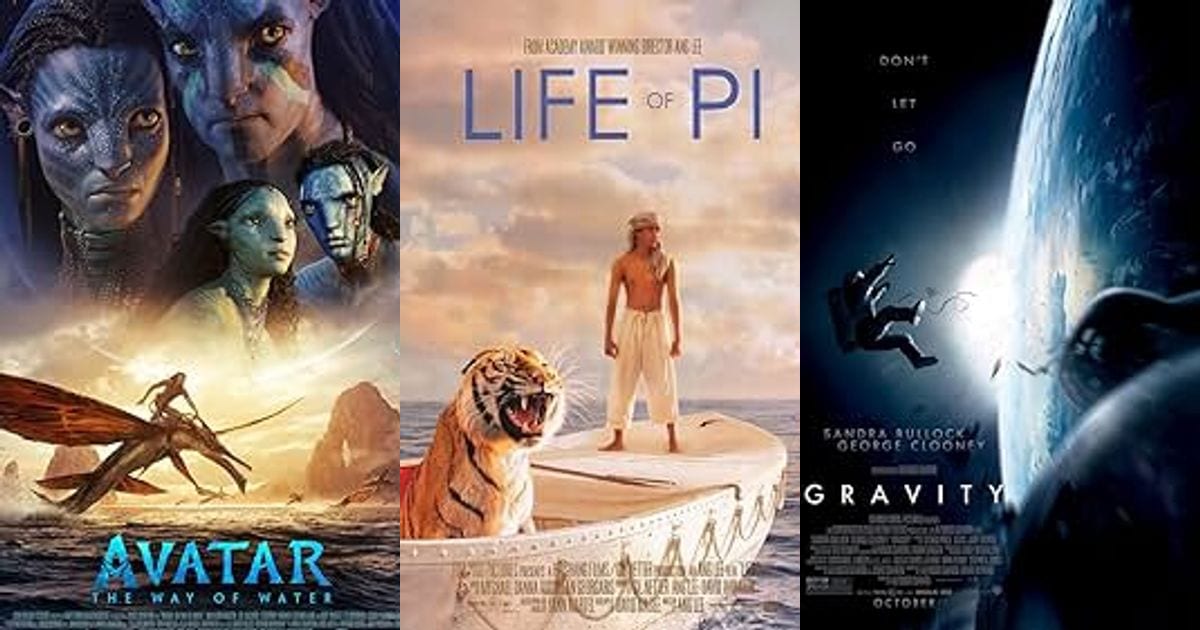
The Magic Behind the Curtain
Since cinema's earliest days, filmmakers have tried to put things on screen that don't exist in reality. The history of special effects is a story of technological ingenuity, artistic daring, and occasionally, some genuinely goofy rubber monsters. It starts not in a computer lab but in a Parisian workshop, where a magician-turned-filmmaker named Georges Melies accidentally discovered that stopping and restarting a camera could make objects vanish, appear, or transform. His 1902 short A Trip to the Moon, with its iconic image of a rocket lodged in the Man in the Moon's eye, is often cited as the birth of the special effects film, built entirely from in-camera trickery, painted backdrops, and theatrical stagecraft borrowed from the world of illusionism. Everything that followed, from rubber suits to render farms, is really just an elaboration on Melies's original insight: the camera doesn't have to show the truth, it just has to show something convincing.
The Practical Era (Silent Era-1980s)
Want a spaceship? Build a model, often from spare car and tank kit parts. Want a monster? Put someone in a suit, or animate a clay puppet frame by frame. For most of the twentieth century, "special effects" meant physical objects, physical labor, and a lot of patience. Stop-motion pioneer Willis O'Brien brought a giant ape to life one twenty-fourth of a second at a time for King Kong (1933), animating small armatures covered in rabbit fur that, notoriously, rippled and shimmered on screen because his fingers kept disturbing it between frames, a "flaw" that somehow only added to the creature's menace. His protege Ray Harryhausen refined the technique into an art form, developing "Dynamation" to blend miniature stop-motion creatures with live-action footage in films like Jason and the Argonauts (1963), whose skeleton army fight remains a marvel of single-frame patience, reportedly months of work for a few minutes of screen time.
Meanwhile, Japan built its own entire effects tradition around "suitmation," actors in heavy rubber suits stomping through miniature cities, pioneered by Eiji Tsuburaya for Godzilla (1954). It's a completely different philosophy from Harryhausen's frame-by-frame animation, but just as labor-intensive, and it produced a monster who's still stomping through movies seven decades later. Elsewhere, matte paintings, hand-painted glass panels combined with live footage, let filmmakers place actors in front of castles, mountains, or alien skylines that were, in reality, a few square feet of canvas sitting a few feet from the lens. Stanley Kubrick pushed the boundaries of in-camera trickery even further in 2001: A Space Odyssey (1968), inventing new front-projection techniques to place his astronauts convincingly inside a decade's worth of budget's worth of "outer space."
Key moment: Star Wars (1977). George Lucas's Industrial Light & Magic invented motion-controlled cameras to make dogfights dynamic, before this, cameras were locked down; Lucas set them free. The system, nicknamed the "Dykstraflex" after effects supervisor John Dykstra, could repeat an identical camera move over a miniature model again and again, letting technicians composite multiple passes, X-wings, TIE fighters, laser blasts, into a single, chaotic, believable dogfight. It's easy to forget, watching the Death Star trench run today, that every ship in that sequence is a physical model a few feet long, shot against black velvet to hide the wires.
Puppets, Suits, and Practical Gore
The late 1970s and 1980s might be practical effects' absolute golden age, if only because the artists working in it were pushing latex and animatronics to their absolute limits, often just to gross out a teenage audience. Rick Baker won the very first Academy Award for Makeup for the werewolf transformation in An American Werewolf in London (1981), performed on camera in full light with mechanical rigs stretching an actor's face into a snout. Rob Bottin topped it a year later with the nightmarish, gloriously wet creature transformations of John Carpenter's The Thing (1982), built from little more than latex, air bladders, and everyday kitchen materials standing in for viscera. And on a gentler note, Frank Oz's hand-and-rod puppet performance as Yoda in The Empire Strikes Back (1980) proved that a green foam creation could carry more genuine emotional weight than most human performances of the era, decades before anyone thought to render him digitally.
Sound as a Special Effect
It's easy to forget that special effects aren't only visual. Ben Burtt, the sound designer behind Star Wars, built the lightsaber hum by combining the buzz of an old film projector motor with feedback picked up from a television interconnect cable, and he created Chewbacca's voice by recording and blending the growls, honks, and grunts of real bears, walruses, and other animals. Blaster fire came from hitting a guy-wire on a radio tower with a hammer and manipulating the resulting twang. None of it exists in nature, and none of it required a single visual effects technician, yet it's just as responsible for making a galaxy far, far away feel tactile and real as any model or matte painting. Foley artists, the unsung craftspeople who recreate footsteps, punches, and creaking doors in post-production, have been quietly performing the same kind of practical trickery since the earliest talkies, proving that convincing an audience's ears is every bit as important as convincing their eyes.
The Digital Revolution (1990s-2000s)
Computers finally caught up with imagination, triggering a CGI gold rush that sometimes aged poorly, but often stunned audiences completely. Early experiments were tentative: the glowing grid battles of Disney's Tron (1982) look primitive today, but they proved a computer could generate an entire believable environment. James Cameron's The Abyss (1989) then introduced the "pseudopod," a shimmering water tentacle with a human face, built by ILM using groundbreaking software to simulate reflective, morphing liquid, a testbed for the technique Cameron would push much further two years later.
That next step was Terminator 2: Judgment Day (1991), whose liquid-metal T-1000 walked through bars, reformed after being blown apart, and morphed seamlessly between actor Robert Patrick and a chrome CG double. It was the moment mainstream audiences understood that computers could render something no rubber suit or model ever could: fluid, physics-defying metal that still moved like a person. Four years later, Pixar's Toy Story (1995) went even further, becoming the first entirely computer-animated feature film, proving CGI wasn't just a tool for one flashy shot, but could sustain an entire feature's visual language.
Key moment: Jurassic Park (1993). The instant the T-Rex stepped out of its paddock, practical effects met cutting-edge CGI, and audiences believed a dinosaur was truly on screen. What's often forgotten is how much of the film is still practical: Stan Winston's animatronic, full-size T-Rex and Velociraptors handled most close-up work, while the CG dinosaurs, built by a small team at ILM using software originally intended for other purposes entirely, were reserved for the wide shots and full-body movement no puppet could manage. Spielberg's insistence on blending both, rather than replacing one with the other, is the reason the film's effects still hold up more than three decades later, while plenty of fully-digital films from the same decade look distinctly dated.
Motion Capture and Digital Humans
The 2000s introduced a new frontier: not just digital creatures, but digital performances. Andy Serkis's portrayal of Gollum in The Lord of the Rings: The Two Towers (2002) and its sequels, achieved through motion-capture suits and WETA Digital's software, blurred the line between actor and animation so thoroughly that the industry spent years arguing about whether Serkis deserved an acting award for a role nobody could see his actual face in. The technique matured further with Bill Nighy's tentacle-bearded Davy Jones in Pirates of the Caribbean: Dead Man's Chest (2006) and reached a new scale entirely with James Cameron's Avatar (2009), which used performance-capture on an enormous, custom-built volume to translate real actors' performances onto ten-foot-tall blue aliens, in the process popularizing modern stereoscopic 3D filmmaking all over again.
Virtual Production (Today)
The line has blurred completely. "The Volume," seen in The Mandalorian, uses giant LED walls to render real-time backgrounds behind actors, solving the lighting problems that plagued old green screens, since the screen itself now lights the actor. Rather than shooting against a flat green void and compositing a background in months later during post-production, filmmakers can now see the finished environment live on set, adjust it interactively, and capture realistic reflections and lighting cues directly in-camera. It's a technique built on decades of game-engine development, much of the Volume's real-time rendering runs on technology originally designed for video games, not movies.
Digital de-aging technology has become its own specialized industry too, letting filmmakers show older actors as younger versions of themselves, as seen with the decades-spanning cast of Martin Scorsese's The Irishman (2019), without recasting a single role. Yet even amid all this digital sophistication, plenty of major filmmakers have doubled down on practical work precisely because audiences can subconsciously tell the difference: George Miller shot as much of Mad Max: Fury Road (2015) with real vehicles, real stunt performers, and real explosions as humanly possible, using CGI mainly to enhance rather than replace what the camera actually captured, and Tom Cruise has built an entire late-career brand around performing outrageous practical stunts himself rather than handing the work to a digital double.
Did you know? In the original Alien (1979), the creature's dripping "slime" was actually K-Y Jelly. Sometimes the hardware store beats the computer.
Whatever the tool, the goal has never changed: make the audience believe, even for two hours, that the impossible is standing right in front of them. From Melies's disappearing rabbits to a fully rendered LED soundstage, the throughline connecting all of it is the same magician's promise: look here, believe this, and for just a moment, forget that any of it is fake at all.
Box Office Flops That Became Beloved Movie Classics
They tanked on release and got trashed by critics. Here's how four legendary flops became untouchable classics.
The Directors Who Made One Masterpiece and Then Vanished
They made one undeniable classic, then faded away. Here are cinema's greatest one-hit wonders.
How to Host a Movie Quiz Night (With a Free 40-Question Quiz)
The format, the timing, the scoring, and the four mistakes that sink most home quizzes — plus a complete 40-question movie quiz with answers, ready to run tonight.