
Lightning Struck Once
Making a masterpiece is hard. Making two is nearly impossible. Music has its one-hit wonders; cinema has directors who delivered a single culture-shifting film and then either chased that high forever or simply stopped trying. What's strange is how little correlation there seems to be between raw talent and repeatability. Some of the most gifted filmmakers who ever picked up a camera made exactly one great film, and then the universe simply declined to let them make a second. This isn't really a story about failure. It's a story about the strange, unrepeatable alchemy required to make a masterpiece in the first place, and about how rarely that alchemy agrees to show up twice for the same person.
The Legends of One
- Charles Laughton — The Night of the Hunter (1955): A legendary actor who directed exactly one film. It's a Southern Gothic nightmare with imagery so stark and beautiful it still shapes directors today. It flopped on release, and a heartbroken Laughton never directed again — one of cinema's great tragedies. Laughton was already one of the great screen actors of his generation when he sat in the director's chair, and he brought a painter's eye to it: cinematographer Stanley Cortez lit the film like a German Expressionist fever dream, all silhouettes and moonlit rivers, while Robert Mitchum turned in the performance of his career as a murderous preacher with LOVE and HATE tattooed across his knuckles. Audiences in 1955 didn't know what to make of a film that felt half fairy tale, half horror movie, and it died quietly at the box office. It took roughly thirty years for critics and filmmakers to fully catch up; the film now sits in the National Film Registry, and directors from Martin Scorsese to the Coen Brothers to Guillermo del Toro have named it among their all-time favorites. Laughton spent the rest of his life acting, and, by most accounts, never fully got over the rejection.
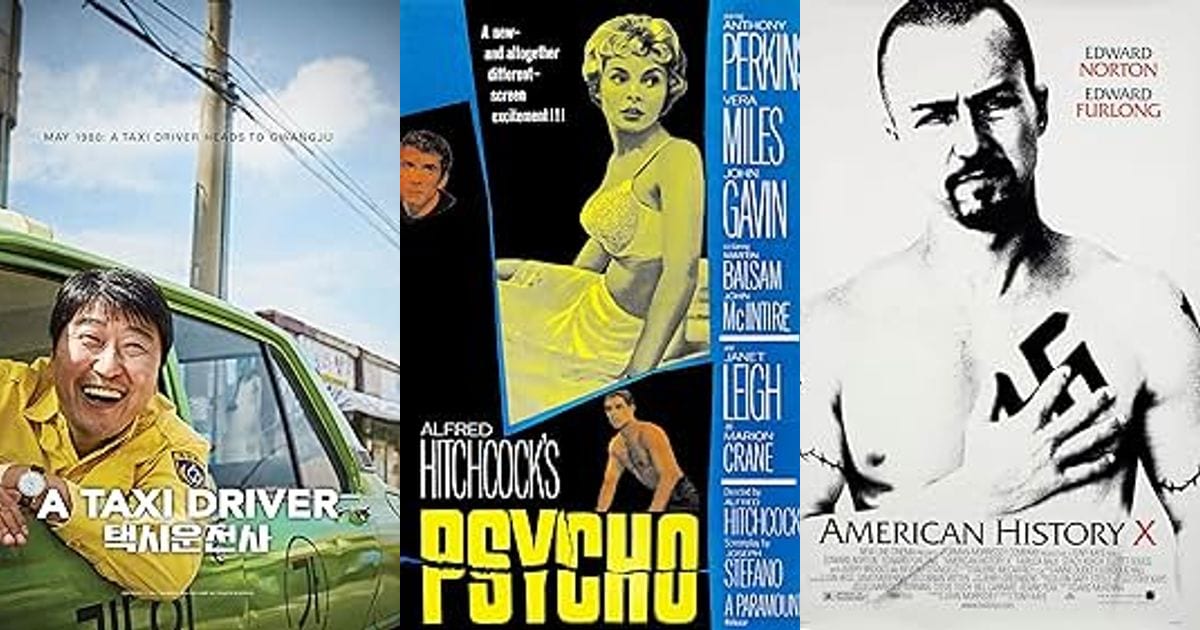
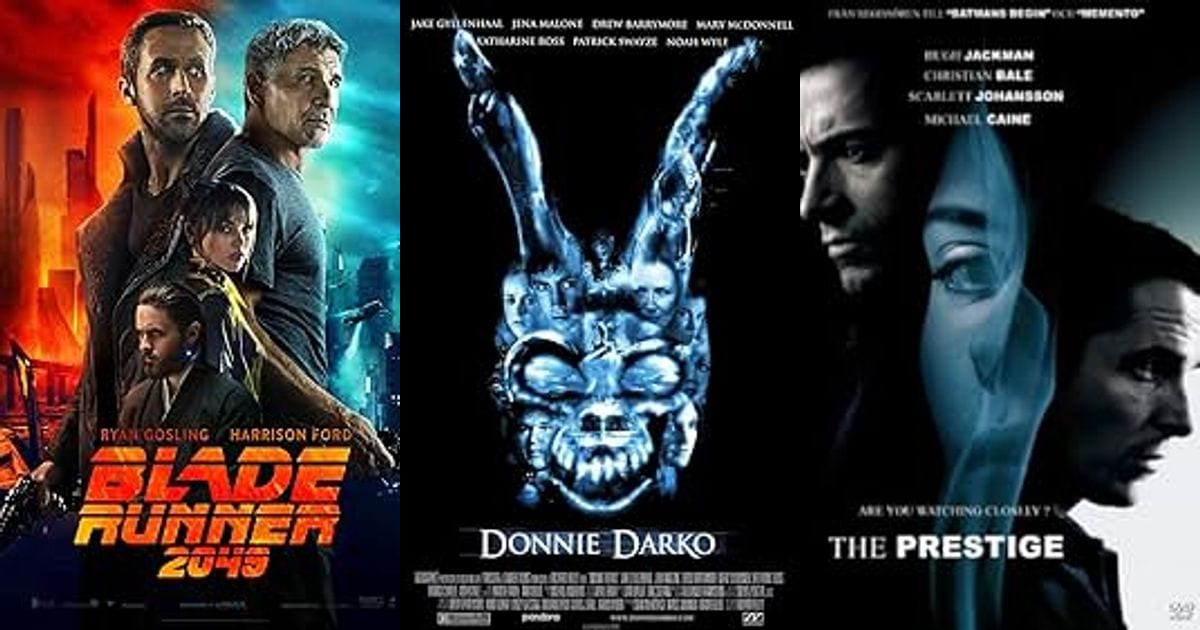
- Richard Kelly — Donnie Darko (2001): He arrived at 26 with a mind-bending sci-fi cult classic that defined a generation of angsty teenagers. Critics called him the next Kubrick. His follow-up, the sprawling mess Southland Tales, suggested his debut may have been captured lightning. Donnie Darko had brutal timing — it opened in theaters just weeks after 9/11, and a story built around a jet engine falling out of the sky onto a suburban house had almost no chance with 2001 audiences. It came and went in a blink, then found its real life on DVD and at midnight screenings, becoming one of the defining cult objects of the early 2000s. Kelly did get a second and third chance: Southland Tales premiered at Cannes to now-legendary booing and needed a drastic recut before its eventual release, and 2009's The Box fared little better with critics or audiences. He hasn't directed a feature film since. Whatever specific cocktail of teenage alienation, Reagan-era paranoia, and photocopied philosophy-class plotting made Donnie Darko work turned out to be a one-time formula, even for the person who invented it.
- Daniel Myrick & Eduardo Sánchez — The Blair Witch Project (1999): They invented modern found-footage horror on a shoestring budget and convinced the world it was real. They've worked steadily since, but never again touched that cultural nerve. The film was shot in about eight days on a budget widely reported around $60,000, and marketed with a fake "missing persons" website that genuinely convinced a chunk of the pre-social-media internet the footage was real. It went on to become one of the most profitable films ever made relative to its cost. Every found-footage horror movie that followed — Paranormal Activity, Cloverfield, REC — is paying rent to Myrick and Sánchez. Neither director actually vanished: Sánchez went on to make Lovely Molly, Myrick made The Objective, both competent, well-reviewed genre efforts that almost nobody outside horror-forum circles could name today. The directors didn't disappear. The cultural moment did.
More One-and-Dones
Laughton, Kelly, Myrick, and Sánchez are the famous cases, but film history is full of quieter versions of the same story — filmmakers who touched greatness once and then watched the door quietly close.
Michael Cimino isn't technically a one-film director — he made several movies before and after his big moment — but his career might be the purest illustration of how fast the ground can shift under a great filmmaker. The Deer Hunter (1978) won Best Picture and Best Director, and for about eighteen months afterward, Cimino was arguably the most acclaimed filmmaker working in America. Then came Heaven's Gate (1980), an operatic Western so wildly over budget and over schedule that its name became Hollywood shorthand for directorial hubris, and it is widely blamed for helping sink United Artists as a studio. Cimino kept directing afterward, but he never again came close to The Deer Hunter's reputation. One masterpiece, one catastrophe, and a career that, in the eyes of the industry, basically ended within the span of two films.
Barbara Loden directed exactly one feature in her life: Wanda (1970), a spare, unglamorous character study she wrote, directed, and starred in, about a drifting woman adrift in the Pennsylvania coal country. John Cassavetes reportedly called it one of the best American films he had ever seen, and it won a prize at the Venice Film Festival. Loden — married to director Elia Kazan, and working in an industry that offered almost no financing to women directors in the 1970s — never got the chance to make a second film, and died of cancer in 1980 while, by most accounts, still trying to get one off the ground. Wanda has since been restored, added to the National Film Registry, and is now taught as a landmark of American independent cinema, decades after the industry decided that one film from Barbara Loden was plenty.
Herk Harvey might be the strangest case of all, because he wasn't trying to have a film career in the first place. Harvey spent his working life directing industrial and educational shorts out of Kansas, the sort of films shown to schoolchildren about traffic safety and dental hygiene. In 1962, on a break between projects, he shot Carnival of Souls, a hypnotic, low-budget ghost story made for a tiny fraction of a studio picture's budget, using local Kansas actors and his own industrial-film crew. It flopped on release, Harvey went back to making safety films, and he never directed another feature for the rest of his life. Decades later, Carnival of Souls was rediscovered as a formative influence on modern horror — its ghostly ballroom imagery echoes through Night of the Living Dead and even Twin Peaks — and it now sits in the National Film Registry alongside films made with vastly larger budgets by directors who spent entire careers chasing exactly what Harvey stumbled into on a two-week break from making safety filmstrips.
Chasing the High vs. Simply Stopping
Not every director in this conversation disappears; some spend the rest of their careers trying to recreate the exact chemical reaction that made their breakout work, with steadily diminishing returns. M. Night Shyamalan is the textbook example: The Sixth Sense (1999) was a genuine cultural phenomenon, and for years afterward, nearly every subsequent film he made was marketed around the promise of another twist ending, whether or not the story actually needed one. It's a different flavor of one-hit-wonder-ism than Laughton's or Loden's — not a director shut out of the industry, but a director permanently orbiting a single early triumph, for better and for worse, in the public imagination.
None of these directors set out to make a one-and-done career. That's what makes the pattern so eerie — talent alone clearly isn't enough to repeat lightning. Sometimes a film needs the exact right director, at the exact right moment, making the exact right mistakes.
Why Lightning Rarely Strikes Twice
There's a reason this pattern keeps repeating across decades and genres. Low budgets force creative solutions that read, in hindsight, as style — a director with no money for a crane shot invents a more haunting composition instead. Low expectations mean no studio executives hovering over the edit, which means the weird choices survive. A first film is often powered by genuine personal obsession, a story the filmmaker has been carrying around for years, and that specific kind of hunger is nearly impossible to summon on command for a contractually obligated follow-up. Once a director actually has money, resources, and expectations, they often lose the very constraints that made the debut sing in the first place. Layer on top of that the industry's brutal gatekeeping — one expensive flop, or simply being a woman or an outsider in a closed-off decade, could end financing regardless of how much talent was on display — and it starts to look less like a mystery and more like the natural odds of an unforgiving business.
Sometimes the stars only align once. But one masterpiece on your résumé beats none at all. And if the history of cinema tells us anything, it's that a hundred forgettable careers are worth trading for one Night of the Hunter, one Wanda, one Carnival of Souls, even if the world doesn't notice for thirty years.
Movie Continuity Errors So Good They Became Legendary
From Pulp Fiction's shape-shifting wallet to Braveheart's time-traveling extras, some movie mistakes are so beloved that fans wouldn't dream of fixing them. Here's why continuity errors happen, and the famous ones we can't stop talking about.
Box Office Flops That Became Beloved Movie Classics
They tanked on release and got trashed by critics. Here's how four legendary flops became untouchable classics.
The Wild Evolution of Movie Special Effects, From Puppets to CGI
From rubber-suit monsters to real-time LED backgrounds — here's how movie magic actually evolved.