
The Thrill of Catching a Cameo Nobody Told You About
There is a very specific jolt of joy that happens when you are twenty minutes into a movie, half paying attention, maybe reaching for more popcorn, and suddenly your brain screeches to a halt. Wait. Was that... no. Was that actually him? You rewind. You pause. You squint at the screen like you are examining evidence in a courtroom drama. And then it hits you: yes, that absolutely was a wildly famous person, standing in the background of a diner scene or delivering a single line as a security guard, and the movie is just going to keep going as if nothing happened.
Celebrity cameos are one of cinema's great inside jokes, a wink shared between the filmmakers and the small percentage of the audience paying close enough attention to catch it. Sometimes they are played completely straight, so straight that you genuinely do not register a face you have seen a thousand times before. Other times the person is buried under so much prosthetic makeup that recognizing them becomes its own kind of trivia sport. Either way, the best cameos are the ones that vanish into the film so completely that you need someone to point them out to you years later, usually while you are half-watching the movie again on a Sunday afternoon. Here are some of the most well-documented, genuinely surprising ones that tend to slip right past even attentive viewers.
Alfred Hitchcock, the Original Cameo King
Long before cameo-spotting was a competitive sport for movie nerds with rewind buttons, Alfred Hitchcock had already turned it into an art form. Starting in the silent era and continuing through nearly every one of his major films, Hitchcock made a habit of slipping himself into his own productions, usually for only a few seconds and almost always without a word of dialogue. He is the man boarding a bus in "North by Northwest," the passenger missing a train in "Strangers on a Train," a passerby walking a pair of dogs outside a pet shop in "The Birds." In "Lifeboat," a film set entirely on a single life raft with no obvious way to insert a background extra, Hitchcock famously solved the puzzle by having his image appear in a newspaper advertisement for a weight-loss product, a joke aimed at his own well-documented struggles with his weight.
What made the Hitchcock cameo genuinely clever, rather than just a director's vanity project, was the timing. He learned early that audiences started scanning every frame looking for him, which was a distraction from the plot, so he trained himself to appear within the first several minutes of each film and get the moment over with quickly. It became such an expected ritual that its absence would have felt strange. Hitchcock did not invent the celebrity cameo outright, but he is the reason the tradition became a beloved piece of film culture instead of a forgotten quirk, and nearly everyone who has hidden themselves in their own movie since owes him a small debt.
Stan Lee's Decades-Long Victory Lap
If Hitchcock planted the seed, Stan Lee turned the celebrity cameo into a full-blown cultural event. Starting with small appearances in early Marvel adaptations and eventually becoming a near-mandatory feature of the Marvel Cinematic Universe, Lee's cameos evolved from a fun bonus into something audiences actively anticipated, sometimes staying through slow scenes purely to catch his next appearance. He played a mailman delivering a package to Peter Parker, a hot dog vendor unfazed by a battle happening a few feet away, a bewildered old man watching Thor's hammer fail to move on a barroom bet, and a records clerk who could not quite place where he recognized Steve Rogers from. In "Guardians of the Galaxy," he even appeared as a Xandarian elder, technically making a cameo in a film set almost entirely in outer space, decades removed from the earthbound characters he created.
Lee's cameos worked because they were rooted in something real. He was not a director indulging himself; he was the co-creator of the characters filling the screen, popping up as a kind of proud, bemused bystander watching his own imagination play out in blockbuster form. After his passing in 2018, Marvel confirmed his final cameos had already been filmed and would continue appearing in released films for a few more years, giving fans a bittersweet reason to keep watching every frame closely, right up through the credits, just in case.
Michael Jackson's Secret Agent Audition in Men in Black II
Here is one that catches even hardcore movie fans off guard. In "Men in Black II," there is a brief scene where various hopeful recruits are being screened for a position with the secretive agency, and one of the candidates being interviewed is, unmistakably, Michael Jackson. He appears as himself, seated at the interview table, insisting with total sincerity that he would make an excellent agent. It is a short scene, easy to miss if you are not paying close attention to the background faces during the recruitment sequence, and it tends to vanish from memory because it is so tonally understated for a cameo involving one of the most famous entertainers on the planet.
The story behind it makes it even better: Jackson reportedly loved the first "Men in Black" film and personally requested to appear in the sequel, going so far as to say he wanted to actually play an agent in a future installment. Director Barry Sonnenfeld obliged with the interview cameo, and Jackson plays the moment completely straight-faced, treating the absurd premise of the Men in Black universe as something he takes very seriously. It is a genuinely odd little piece of movie history, a global pop icon making a blink-and-miss appearance in a summer blockbuster about alien-policing secret agents, purely because he was a fan.
Tom Cruise Disappears Into Les Grossman
Some cameos are missed because they are brief. Tom Cruise's turn as studio executive Les Grossman in "Tropic Thunder" is missed for the opposite reason: he is on screen for an extended, show-stopping sequence, and audiences still did not recognize him. Under a bald cap, prosthetic hands, heavy makeup, and a physicality completely unlike his usual leading-man presence, Cruise plays a foul-mouthed, dance-happy studio boss with such total commitment that early audiences reportedly did not clock it was him until the credits rolled, or until word started spreading afterward. It became one of the most talked-about transformations of his career specifically because it was so unexpected coming from an actor known for his consistent, recognizable screen persona.
The cameo worked precisely because Cruise refused to wink at the audience. He did not play Grossman as "Tom Cruise being wacky"; he played him as a genuinely unhinged studio executive, dancing to Ludacris during the end credits with zero self-consciousness. It is proof that a cameo does not have to be short or subtle to be surprising. Sometimes the disguise is the whole point, and the biggest surprise is realizing just how far a famous face was willing to go to disappear.
David Bowie Judges a Walk-Off in Zoolander
In "Zoolander," when rival male models Derek Zoolander and Hansel need a neutral, suitably fabulous authority to settle their walk-off once and for all, the film calls in David Bowie to play himself as the impromptu judge. He strides in fully in character as the icon he was, delivers his ruling with deadpan seriousness, and disappears from the film just as quickly. It is a short scene, but it lands as one of the more beloved surprise cameos of early-2000s comedy specifically because of how perfectly cast it is: an actual fashion and reinvention icon presiding over a parody of the fashion world's most ridiculous impulses.
What keeps this one forgotten by casual viewers is context. "Zoolander" is stuffed with celebrity cameos, from various models to television personalities appearing as themselves, and Bowie's appearance can blur together with the film's general chaos on a rewatch years later. But go back and look at it again, and it remains a small comic gem: an artist who spent a career defying expectations, taking a scene this silly completely seriously.
Donald Trump's Doorman Directions in Home Alone 2
Before he was a household political name, Donald Trump made a brief, now-famous appearance in "Home Alone 2: Lost in New York" as himself, giving young Kevin McCallister directions in the lobby of the Plaza Hotel, which Trump owned at the time. The scene lasts only a few seconds. Kevin asks where the lobby is, Trump points him in the right direction, and the film moves on without any further acknowledgment of what just happened. For years, it was simply a quirky bit of New York color in a beloved holiday movie, the kind of cameo that plenty of viewers who grew up watching the film every December did not even register as a cameo at all, just an actor playing a hotel employee.
It became one of the more scrutinized pieces of movie trivia decades later, with reports and later denials swirling around exactly how the scene came to be included, given that Trump owned the filming location. Whatever the full story behind the scene, the cameo itself remains a strange little time capsule: a holiday classic quietly preserving a moment of pop-culture history that most of its original audience walked right past.
Why Directors and Stars Keep Doing This
So why does this tradition persist across nearly a century of filmmaking? Partly it is pure affection for the craft. Hitchcock's cameos turned him into a beloved figure among audiences who felt like they were in on something. Stan Lee's cameos let a comic book creator physically step inside the worlds he imagined, aging alongside characters who would never age themselves. For actors like Cruise, a cameo under heavy disguise is a chance to flex a completely different muscle, free from the weight of carrying an entire film. For musicians and cultural icons like Bowie or Jackson, a cameo is often just a genuine, low-stakes way to have fun inside a medium they admire from the outside.
There is also something delightfully democratic about it. A cameo briefly erases the hierarchy between the person who created the universe and the fictional world itself, or between a global superstar and an anonymous extra. It is a director or an icon saying, for just a few seconds, I want to be a small, disposable part of this thing rather than the center of it. That inversion is part of what makes spotting one so satisfying. You are catching someone deliberately choosing to be small.
How to Actually Go Back and Spot the Ones You Missed
If this list has you itching to rewatch familiar movies with fresh eyes, there is a reliable method for cameo hunting. Start by slowing down any scene involving crowds, waiting rooms, interviews, or transit, the classic hiding spots directors love because background faces are expected to blur together. Pause on wide shots rather than close-ups; a cameo is far more likely to be tucked into the edge of the frame than centered in it. And do not underestimate how much a hat, a name tag, or an unfamiliar hairstyle can throw off recognition, which is exactly why Tom Cruise's Grossman fooled so many people despite his screen time.
It also helps to think about the web of connections between the actors, musicians, and public figures who tend to show up in these roles, since the same circles of collaborators and famous friends tend to recur across decades of film. That kind of actor-to-actor, film-to-film connection tracing is exactly the fun buried inside our Degrees of Separation game, where you build paths between performers through the movies and roles that link them. Play it for a while and you start noticing patterns in who tends to show up where, which makes spotting the next hidden cameo a little easier the next time you watch.
Fun fact: Alfred Hitchcock's cameo tradition became such a well-known audience expectation that in later films he sometimes had to get creative to avoid stopping the story cold, including the newspaper-photo workaround in "Lifeboat" and appearing in a photograph advertising a fictional weight-loss product, poking fun at his own famous silhouette.
The Next Rewatch Might Surprise You
The real charm of the celebrity cameo is that it rewards patience and attention in a medium that increasingly asks for neither. These are not twists that reshape a plot or reveals that demand a second viewing to understand. They are tiny, generous gifts left behind by directors and stars who wanted a private joke with whoever happened to be looking closely enough. So the next time you settle in for a movie you think you already know by heart, keep your eyes on the background, the crowd scenes, and the extras who linger a beat too long. You might just catch someone famous, hiding in plain sight, waiting patiently to be noticed.
Bizarre Movie Facts That Sound Fake But Are 100% Real
A near-total wipe of Toy Story 2, a scream reused for seventy years, and a Joker payday that broke Hollywood math — the true stories behind movies are stranger than the movies themselves.
Lost in Translation: The Funniest Foreign Movie Titles Ever
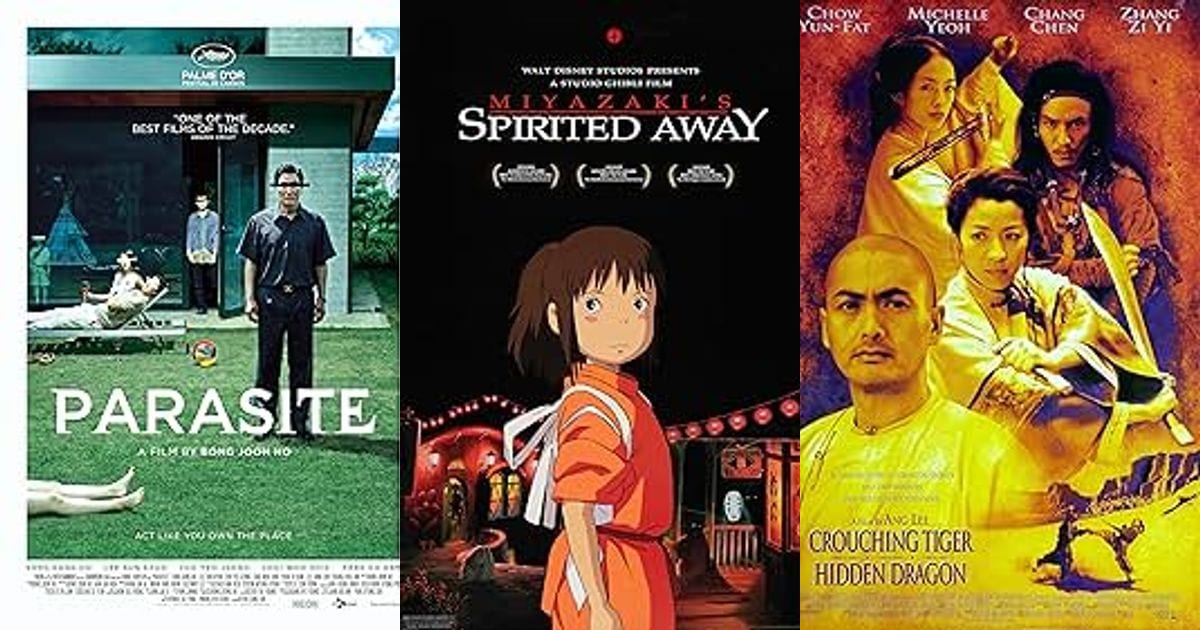
Some translated movie titles are pure marketing genius, some are baffling, and a few beloved ones probably never existed at all. Here's a tour through the real, well-documented cases.
The Most Ridiculous Movie Taglines Hollywood Ever Approved
From sharks with grudges to sequels that admit they're not on a bus anymore, we rank the movie taglines so absurd they looped back around to genius — plus the rare ones that actually nailed it.