
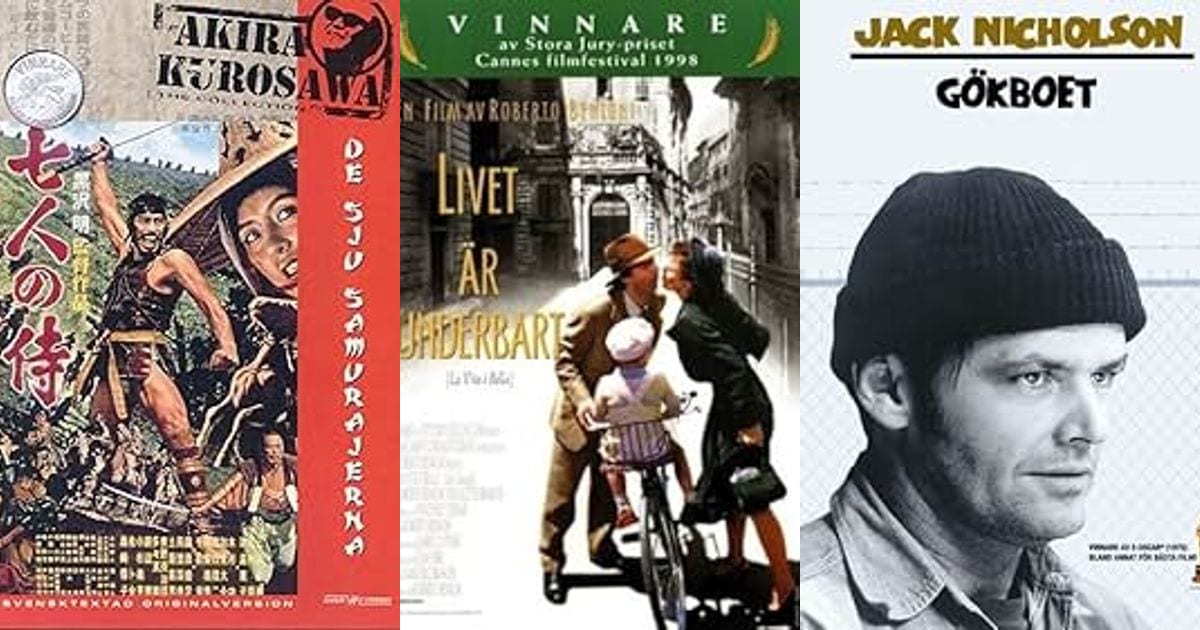
Overcoming the One-Inch Barrier
Director Bong Joon-ho famously said at the Oscars: "Once you overcome the one-inch-tall barrier of subtitles, you'll be introduced to so many more amazing films." He was right — stick to Hollywood only, and you miss roughly 95% of the world's best storytelling.
People assume "foreign film" means slow art-house homework. In reality, world cinema is packed with thrillers, horror, and action that rival — and often beat — anything domestic. The stigma around subtitles is mostly a habit, not a real barrier — within ten minutes of any genuinely great film, most viewers stop noticing they're reading at all and start just watching a movie, the same way they would in their own language. The eye adjusts faster than people expect; the only real requirement is giving a film those first ten minutes before deciding it's "too much work."
Why the Subtitle Myth Persists
Part of the resistance is pure habit — decades of dubbed Saturday-morning cartoons and cheaply localized action movies trained a generation to associate translated dialogue with lower quality. Part of it is genuine unfamiliarity with where to start, since streaming menus rarely surface international titles with the same algorithmic enthusiasm they reserve for whatever's trending domestically. And part of it, frankly, is laziness dressed up as a preference — reading is marginally more effort than listening, and plenty of viewers would rather not admit that's the actual objection. None of these are good reasons to skip some of the best filmmaking being made anywhere in the world right now.
The Starter Pack
- Train to Busan (South Korea): Forget The Walking Dead — this might be the best zombie movie of the last decade, fast and emotional, set almost entirely on a speeding train.
- The Hunt (Denmark): Mads Mikkelsen delivers a powerhouse performance as a kindergarten teacher falsely accused of a crime — a gripping look at hysteria where the real monster is a lie.
- City of God (Brazil): A kinetic, Scorsese-esque dive into organized crime in Rio's suburbs. Fast editing, incredible soundtrack, unmatched energy.
- Let the Right One In (Sweden): A dark, tender, wholly original take on vampire mythology through childhood loneliness — far superior to its American remake.
- Oldboy (South Korea): Park Chan-wook's brutal, operatic revenge thriller helped launch the global obsession with Korean cinema that eventually delivered Parasite to the Oscars stage.
Why Train to Busan Works So Well
What makes Train to Busan more than just "zombies on a train" is how ruthlessly it uses its setting. A train is a closed system — no wide-open rooftop escapes, no convenient armory, just a series of doors between you and the infected. Director Yeon Sang-ho uses that geography to build sustained, escalating tension rather than the stop-and-start rhythm a lot of zombie films fall into, while never losing sight of the estranged father-daughter relationship at its emotional core. It's a reminder that horror hits hardest when the audience actually cares whether the characters survive, not just whether the next set piece is loud.
Why The Hunt Still Stings
Thomas Vinterberg's film is uncomfortable in a very deliberate way: it never lets the audience off the hook with an easy villain. There's no cartoonish liar orchestrating a conspiracy — just a small community's fear feeding on itself faster than the truth can catch up. Mikkelsen, better known internationally for playing icy antagonists, plays against type as an ordinary, decent man watching his entire life dismantled by something he can't fight with logic. It's the kind of premise that could easily tip into melodrama in less careful hands, but Vinterberg's restraint is what makes the final act land as hard as it does.
Why City of God Still Feels Alive
Fernando Meirelles shot much of City of God using non-professional actors recruited from the real favelas the film depicts, and that decision gives the film a documentary-adjacent authenticity that a fully professional cast might never have achieved. The film's structure — jumping across years and narrators, letting minor characters take over the story before violently exiting it — mirrors the actual unpredictability of the world it's depicting. It's frequently compared to Scorsese's Goodfellas for good reason, but its energy and anger are entirely its own.
Why Let the Right One In Earns the Comparison to the Remake
Tomas Alfredson's film strips vampire mythology down to something closer to a fairy tale about isolation, set against a bleak, snow-covered Swedish suburb that does as much emotional work as any of the dialogue. The American remake, Let Me In, is a perfectly competent film in its own right, but it inevitably smooths over some of the original's stranger, colder edges — the ambiguity, the discomfort, the sense that childhood loneliness and monstrousness might not be all that different from each other. Watching both back to back is a genuinely useful lesson in how tone, not just plot, is what a remake so often loses in translation.
Why Oldboy Changed the Conversation
Park Chan-wook's revenge saga — a man imprisoned without explanation for fifteen years, then given five days to find out why — is as much a puzzle box as it is a bloodbath, and its influence on global genre filmmaking since is hard to overstate. The film's most notorious sequence, a single-take hallway fight shot almost like a side-scrolling video game, has been referenced and imitated by action films around the world ever since. Oldboy was part of the wave of early-2000s Korean cinema — alongside directors like Bong Joon-ho and Kim Jee-woon — that convinced international audiences and critics alike that Korean genre filmmaking wasn't a regional curiosity but a legitimate creative force, one that Hollywood would spend the next two decades trying to remake, license, and imitate.
Beyond the Starter Pack: Where to Go Next
Once those five have you hooked, the rest of world cinema opens up fast. Amélie (France) is a whimsical, candy-colored delight if you want proof that foreign films can be pure comfort watching rather than homework. Pan's Labyrinth (Spain/Mexico) blends a fascist-era historical drama with a dark fairy tale so seamlessly that Guillermo del Toro made his international reputation on it. The Raid (Indonesia) is about as close to pure adrenaline as action cinema gets, built almost entirely around a single apartment building siege. A Separation (Iran) turns a divorce and a domestic dispute into one of the most quietly devastating morality plays ever put on screen. Amores Perros (Mexico) launched Alejandro González Iñárritu and Gael García Bernal internationally with a triptych structure that Pulp Fiction fans will recognize instantly. And Cinema Paradiso (Italy) is simply one of the best films ever made about why people fall in love with movies in the first place.
Horror Without Borders
If Train to Busan and Let the Right One In whet your appetite for international horror specifically, the genre runs deep outside Hollywood. Japan gave the West the entire J-horror wave that eventually got remade into The Ring and The Grudge — but the originals, Ringu and Ju-On, are colder and stranger than their American counterparts. Audition, from the relentlessly prolific Takashi Miike, is a film so notorious for its final act that describing it in advance would be doing you a disservice. Spain's [REC] helped popularize the found-footage outbreak format years before American horror leaned on it heavily. None of these films are chasing jump scares for their own sake — they're building dread the slow way, through atmosphere and cultural specificity that a straight remake almost never fully translates.
Building the Habit
The easiest way to make international film a regular part of your viewing diet, rather than an occasional homework assignment, is to pair a new one with something familiar rather than treating it as a separate category entirely. If you love heist movies, watch a Korean or French thriller next to your usual favorites and notice how differently the genre's beats get played. If you're a horror fan, alternate a domestic slasher with a J-horror classic and compare what each culture actually finds frightening — the differences are often more revealing than the similarities. Building a small, rotating watchlist of five or six international titles you're excited about, rather than one intimidating "someday" list, makes the whole habit far more sustainable.
A Note on Subtitles vs. Dubbing
If you're new to international film, it's worth settling the subtitles-versus-dubbing debate for yourself early, because it shapes which version you end up watching. Dubbing replaces the original performance's vocal work entirely, which means you lose the actual actor's line delivery, timing, and emotional texture — often the most carefully calibrated part of a performance. Subtitles preserve the real performance and simply translate the words underneath it. It takes a little adjustment, but most cinephiles land firmly on subtitles for exactly that reason: you're watching the film the director and actors actually made, not a reconstruction of it.
Finding These Films
Streaming libraries rotate international titles unpredictably, so it's worth checking a few reliable sources beyond the major platforms: dedicated services built around world and art-house cinema tend to have deeper catalogs than general-purpose streamers, and many public library systems offer free access to similar catalogs through apps tied to your library card. Physical media collectors' labels have also quietly become one of the best ways to see restored, properly subtitled versions of classic international films that streaming rights have otherwise let lapse.
Hollywood follows a formula. These films don't — the endings aren't guaranteed, the heroes aren't perfect, and the surprises are genuine. Give a handful of these a real shot, subtitles and all, and the "one-inch barrier" Bong Joon-ho described stops feeling like a barrier at all — it just becomes how you watch movies.
The Weirdest Celebrity Cameos You Completely Forgot Were in These Movies
From Hitchcock sneaking into his own films to Tom Cruise vanishing under prosthetics, here are the real, documented celebrity cameos so blink-and-you-miss-it that even devoted fans forget they happened.
The Most Ridiculous Movie Taglines Hollywood Ever Approved
From sharks with grudges to sequels that admit they're not on a bus anymore, we rank the movie taglines so absurd they looped back around to genius — plus the rare ones that actually nailed it.
Movie Continuity Errors So Good They Became Legendary
From Pulp Fiction's shape-shifting wallet to Braveheart's time-traveling extras, some movie mistakes are so beloved that fans wouldn't dream of fixing them. Here's why continuity errors happen, and the famous ones we can't stop talking about.