
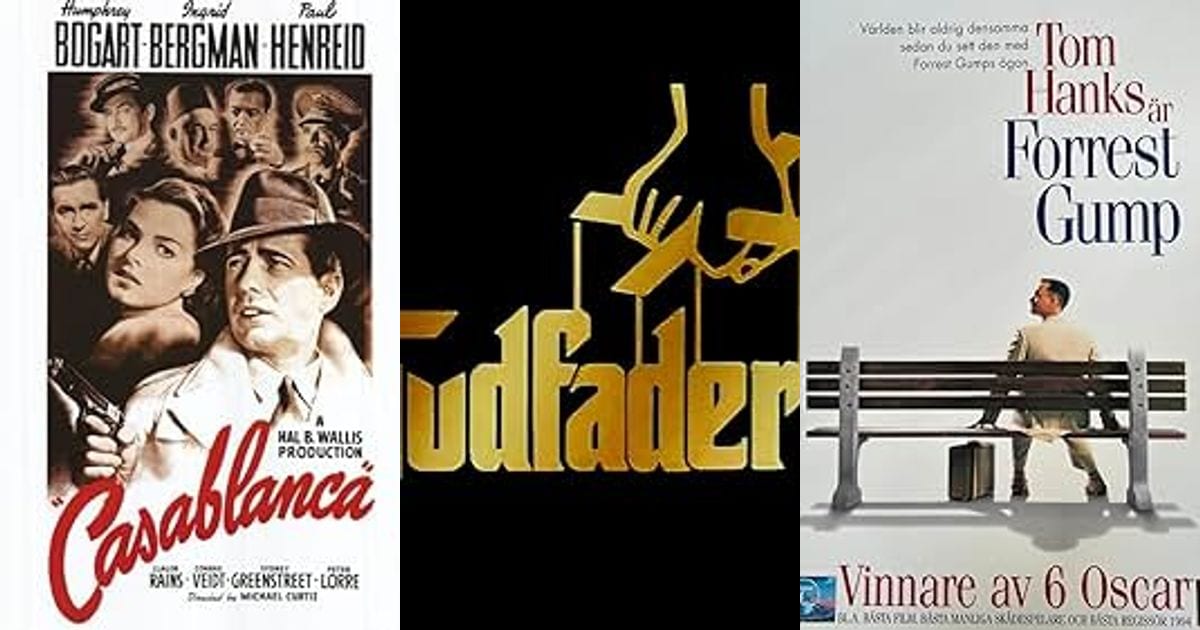
Sharpen Your Cinematic Recall
You're at a pub quiz. The screen flashes one obscure still for five seconds. Your team panics. You sip your drink and whisper, "That's There Will Be Blood, 2007, Paul Thomas Anderson."
How do you become that person? It's not memorizing every movie ever made — it's learning to read visual language. Every era and director leaves a fingerprint.
Think of it like wine tasting, but for celluloid. A sommelier doesn't need to see the label to guess the vintage — they taste the tannins, the oak, the acidity, and cross-reference against a mental library built over years of deliberate attention. Film recognition works the same way. You're not guessing randomly; you're triangulating from a handful of visual signals that, together, narrow a single frame down to one specific movie, made by one specific person, in one specific decade.
The Clues Are in the Frame
- The color grade: Sickly yellows and grays point to David Fincher (Zodiac, Gone Girl). High-contrast neon pink and blue points to Nicolas Winding Refn (Drive) or a synth-wave action flick.
- The aspect ratio: A tight, near-square frame (4:3) suggests a classic pre-1950s film, or a modern homage like Wes Anderson's The Grand Budapest Hotel or Robert Eggers's The Lighthouse. A very wide, letterboxed frame closer to 2.35:1 often signals a widescreen epic descended from the old CinemaScope era, or a modern director deliberately chasing that same sense of grandeur.
- The face: Recognizing an actor's age and haircut narrows the decade fast — a young, long-haired Brad Pitt puts you squarely in the mid-90s.
- The lens: A shallow depth of field with soft, glassy background blur usually points to a modern digital production shot on a large sensor. A flatter image where foreground and background are equally sharp often points toward classic studio filmmaking, where deep focus was a deliberate stylistic weapon for directors like Orson Welles.
- The blocking: Are the characters arranged like chess pieces, dead center, staring straight into the lens? That's a directing choice, not an accident, and it usually belongs to a very specific handful of filmmakers.
Know the Director Signatures
- Wes Anderson: Perfect symmetry, pastel colors, characters staring straight into the camera.
- John Woo: Slow-motion doves through a church, mid-gunfight, always.
- Quentin Tarantino: The trunk shot and gratuitous close-ups of feet.
- J.J. Abrams: Lens flares. So many lens flares.
- Stanley Kubrick: One-point perspective — a corridor or room receding toward dead center, locked into perfect symmetry (The Shining, 2001: A Space Odyssey).
- Alfred Hitchcock: High vantage points that make characters look small and watched, plus a fondness for staircases and blondes in trouble.
- Steven Spielberg: A silhouetted figure backlit by one impossibly bright practical light source, and awestruck faces looking up and slightly off-camera.
- Terrence Malick: Sun-drenched, magic-hour light filtered through tall grass, with a whispered, half-heard voiceover doing the emotional heavy lifting.
- Denis Villeneuve: A tiny human figure swallowed by an enormous, hazy structure — brutalist buildings, sandworms, alien monoliths — always dwarfing the person in frame (Blade Runner 2049, Dune, Arrival).
- Sofia Coppola: Soft, diffused pastel light and a mood of gorgeous, wealthy boredom.
- Edgar Wright: Whip-pans and match cuts timed so precisely to the soundtrack that you can practically hear the needle drop just from the still.
- Michael Bay: Low-angle hero shots, an explosion somewhere in the background, and a color grade so orange-and-teal it's practically a trademark.
- Guillermo del Toro: Amber and blood-red practical lighting on a gothic, cluttered set, usually with a monster lurking just outside the light.
Beyond Hollywood: National and Movement Signatures
Director signatures aren't the only fingerprints worth learning — entire film movements and national cinemas have their own visual grammar. The French New Wave of the late 1950s and 1960s, led by directors like Jean-Luc Godard and François Truffaut, favored jump cuts, handheld cameras, natural Parisian street light, and actors who might glance straight at the lens as if daring you to notice the camera. Italian Neorealism, a movement born out of the rubble of postwar Italy, used unglamorous location shooting, non-professional actors, and working-class stories — Bicycle Thieves is the textbook example, and its grainy, unpolished honesty is instantly distinguishable from anything shot on a studio backlot. Hong Kong cinema and directors like Wong Kar-wai gave the world saturated neon, cramped noodle-shop interiors, and a stuttering, step-printed slow-motion effect that makes movement feel like memory (Chungking Express, In the Mood for Love). Bollywood productions announce themselves with vibrant, oversaturated color and wide ensemble frames built to accommodate elaborate song-and-dance numbers. And Studio Ghibli's hand-painted backgrounds — lush, detailed, and obsessed with food, weather, and small domestic rituals — are recognizable within half a second, even to people who've never seen a single frame of Spirited Away or My Neighbor Totoro.
Read the Film Stock, Not Just the Scene
Before you even register what's happening in a frame, the texture of the image itself is already talking to you. Early Technicolor, used from the 1930s through the 1950s, produces impossibly saturated primary colors — the ruby red of The Wizard of Oz's slippers is as much a giveaway of the process as it is of the costume department. The gritty, grainy, slightly desaturated look of a lot of 1970s American cinema — think The French Connection or Taxi Driver — comes from faster, rougher film stocks and a New Hollywood generation of directors who liked their images a little dirty on purpose. Modern digital cinematography, by contrast, tends to be cleaner and sharper, and capable of a much shallower depth of field, which is why a lot of films from the 2010s onward have that glassy, almost-too-crisp look in close-up.
Black-and-white is its own clue category, and it can cut two ways. It might mean a genuine pre-1960s production, but it might also mean a director making a deliberate statement decades after color became the industry default — Schindler's List, The Artist, Mank, and Nebraska are all black-and-white by choice. If you spot black-and-white cinematography paired with a clearly modern haircut or a piece of visible contemporary technology, you're almost certainly looking at a stylistic choice rather than an actual vintage film.
Costume, Cars, and Clutter: Production Design as a Time Machine
Set dressing and wardrobe are some of the fastest decade-stamps available to you, often faster than recognizing the actor. Bell-bottoms and wood paneling scream the 1970s. Shoulder pads, big hair, and primary-color power suits scream the 1980s. A flip phone or a chunky beige desktop monitor pins you somewhere between the late 1990s and mid-2000s, while an early smartphone with a single home button suggests the early 2010s. Even the technology characters aren't using can help — a total absence of phones in a contemporary-looking story usually means the film is deliberately set decades earlier, or the director is going out of their way to avoid dating the film at all.
Cars are another underrated clue. A boxy, chrome-heavy sedan tells you 1960s or earlier; a rounded, aerodynamic hatchback usually means the late 1980s onward. If you can spot the make and model, you can often narrow a film down to within a five-year window before you've even considered the plot.
The Score You Can Almost Hear
A single frame is silent, but plenty of movie images come pre-loaded with a sound in your memory, and that association is a legitimate clue. John Williams built entire careers on instantly recognizable brass motifs — the two-note dread of Jaws, the triumphant fanfare of Star Wars — so a shot that "feels like" it should have French horns swelling underneath it often does. Ennio Morricone's twangy guitars and human whistling are the sonic signature of the Spaghetti Western, so a dusty, sun-bleached wide shot of a lone figure on the horizon might as well have his name stamped in the corner. Hans Zimmer's deep, booming brass hits became such recognizable shorthand for tension across the 2010s that entire trailers were built around imitating them. If a still makes you mentally hum a theme before you can name the film, trust that instinct — it's doing real recognition work.
Build the Habit: Practice Like It's a Skill, Because It Is
- Rewatch with your eyes, not just your ears. Put on a favorite film and consciously watch for color palette, framing, and lens choice instead of following a plot you already know by heart.
- Work through a canon list. The AFI Top 100 or a well-regarded "essential films" list from Letterboxd or a film school syllabus will expose you to a spread of decades and national cinemas in a manageable order.
- Play frame-guessing games on purpose. Pause a random streaming film on a random timestamp with a friend and see who can name it fastest — it's the exact skill a pub quiz demands, and it doubles as a genuinely fun party game.
- Follow accounts that post stills without context. Plenty of cinephile social accounts exist purely to post a beautiful, uncaptioned frame and let followers guess — that's free daily practice.
- Learn a director's whole filmography, not just their hits. Signatures become obvious once you've seen the same visual trick used four or five times across a career.
Build this library on purpose. Watch a handful of films from each decade and each major director, paying attention to color, framing, and rhythm rather than just plot. Recognition is a skill, and like any skill, it gets sharper with deliberate practice. Give it six months of casual attention, and you'll be the one whispering the answer while your teammates are still squinting at the screen.
Guess the Film From a Terrible Plot Summary: 30 Questions With Answers
Thirty films described as unhelpfully as possible, with answers. The rare quiz where being wrong is funnier than being right — and no film knowledge is wasted.
How to Host a Movie Quiz Night (With a Free 40-Question Quiz)
The format, the timing, the scoring, and the four mistakes that sink most home quizzes — plus a complete 40-question movie quiz with answers, ready to run tonight.
Movie Drinking Games That Will Absolutely Get You Too Drunk
A tongue-in-cheek guide to drinking games built around the most repetitive movies and genres of all time, with a serious note on keeping the whole thing fun and safe.