
Respect the Scale
4K TVs are affordable and soundbars are great — but some movies are still insulted by a 55-inch screen and a cat walking across the coffee table. Certain films are designed as events, demanding a screen big enough and sound loud enough to rattle your ribcage. These aren't just movies you watch; they're movies you're supposed to sit inside of, and shrinking them down to living-room size is a little like listening to a symphony through a single earbud. The information is technically all there. The experience is not.
The Big-Screen Essentials
- 2001: A Space Odyssey (1968): Less a movie, more a religious experience. The silence of space against a thundering classical score demands total immersion — hypnotic in a theater, merely slow on a TV. Stanley Kubrick shot much of it in a large-format process specifically so the Star Gate sequence would overwhelm the audience's entire field of vision; watching it on a phone screen, or worse, a phone screen with notifications popping up, defeats the purpose of the film on a molecular level.
- Lawrence of Arabia (1962): Desert landscapes so vast they defy a television screen. Peter O'Toole as a tiny speck on the horizon captures nature's terrifying beauty like nothing else. David Lean and cinematographer Freddie Young composed shots specifically to make the human figure feel insignificant against the dunes — a compositional trick that doesn't land the same way when Lawrence's silhouette is the size of a grain of rice on a laptop screen instead of the size of an actual person on a cinema screen.
- Mad Max: Fury Road (2015): Pure sensory chaos. The roaring engines and junkie guitar guy need a real theater sound system to actually be felt. George Miller built the film around practical stunts and real vehicles tearing across real desert, and the sound design — layers of engine growl, sand, and score — is mixed to hit you physically, not just audibly. On a soundbar, it's loud. In a theater, it's a full-body experience.
- Dune: Parts One & Two: Denis Villeneuve understands scale better than almost anyone working today. The brutalist architecture and sandworms are built to make you feel small — seeing it in IMAX is visiting Arrakis, not just watching a movie about it. The sound design is built around frequencies you feel in your chest before you consciously register them as sound, particularly in the sandworm sequences and the Voice scenes — details that simply do not translate through television speakers.
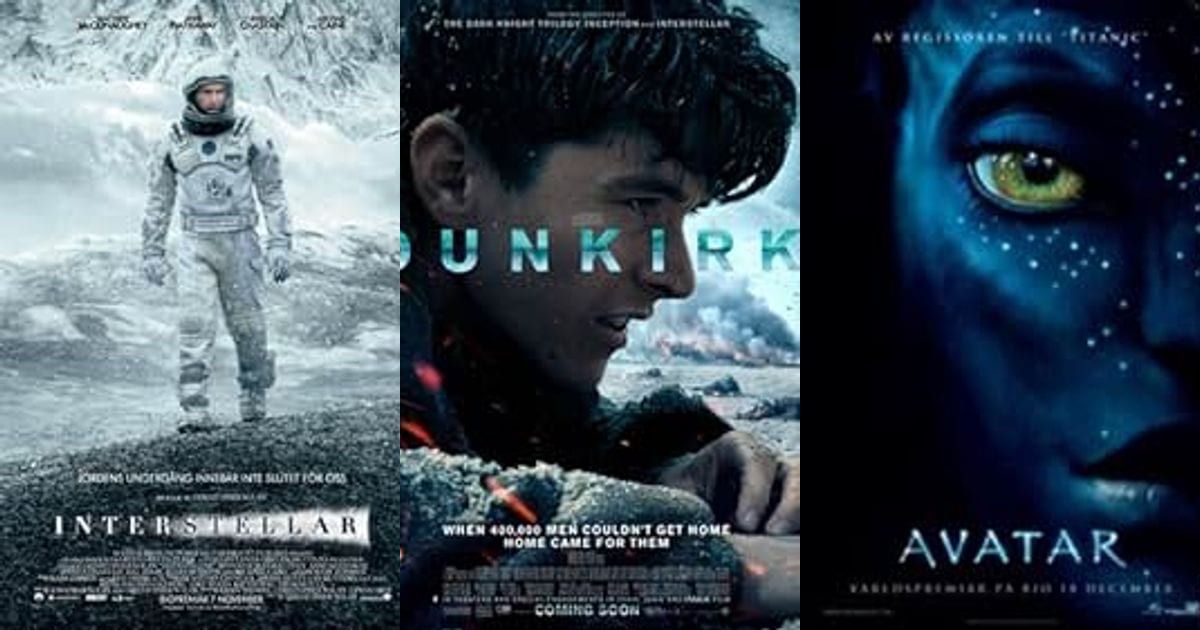
- Interstellar (2014): The docking scene, full stop. Hans Zimmer's organ score needs the biggest sound system available to physically vibrate your chest. Christopher Nolan shot large portions in 70mm and IMAX specifically for sequences like the wormhole and the tesseract, banking on theaters that could do the format justice — a bet that paid off for anyone who saw it that way and a bit of a shame for anyone who didn't.
None of these lose their story on a laptop. But they lose the point of watching them at all — scale isn't decoration for these films, it's the entire argument they're making.
More Films That Demand the Big Screen
- Oppenheimer (2023): Christopher Nolan shot the Trinity test sequence without CGI, on large-format IMAX film, specifically so the detonation would swallow the audience whole. Watching that scene on a television is like reading about an explosion instead of witnessing one.
- Blade Runner 2049 (2017): Roger Deakins' cinematography turns Los Angeles into a towering, neon-drenched wall of light and shadow. The scale of the sets and the depth of the color grading reward a screen big enough to actually see into the frame's darker corners.
- The Dark Knight (2008): Christopher Nolan filmed several sequences, including the opening bank heist, in native IMAX, and the aspect ratio literally expands on an IMAX screen to show more image than a standard theater gets. That's not a metaphor — you're seeing a physically larger frame.
- Avatar (2009) and Avatar: The Way of Water (2022): James Cameron built these films around 3D and high frame rate technology meant to make Pandora feel tangible. On a home screen, a lot of that dimensional depth simply doesn't register the same way.
- Gravity (2013): Alfonso Cuarón's long, unbroken takes of astronauts spinning through the void are designed to induce genuine vertigo. That disorienting scale gets lost fast once the frame shrinks down to coffee-table size.
- Top Gun: Maverick (2022): Shot with cameras mounted in real fighter jets pulling real G-forces. The whole point is that you feel like you're in the cockpit, which requires a screen large enough to actually surround your peripheral vision.
- The Lord of the Rings trilogy: Peter Jackson's sweeping New Zealand vistas were composed for scale from the very first shot of the fellowship crossing open country. Middle-earth is a big place; it deserves a big frame.
Why Scale Isn't Just About Size
It's tempting to think this is purely about screen inches, but scale is really about three things working together: image size, sound pressure, and shared darkness. A bigger screen alone doesn't do much if the sound is thin — half of what makes Fury Road or Dune feel enormous is the way a proper cinema subwoofer moves air in the room. And the shared darkness matters more than people give it credit for: watching 2001 in a room with the lights fully off, phones away, and strangers equally committed to silence changes your relationship to the film's slow, meditative pacing. At home, the temptation to glance at a second screen is always one arm's length away. In a theater, that option simply doesn't exist, and the film gets the attention it was built to demand.
A Little History: Why Hollywood Built for Scale in the First Place
The push toward giant-screen spectacle isn't new — it's practically as old as television itself. In the 1950s, as TV sets started showing up in American living rooms and threatening to keep audiences home, studios responded by going bigger, not smaller. Widescreen formats like CinemaScope and the multi-projector Cinerama process were explicitly designed to offer something a boxy black-and-white television could never replicate: an image wide enough to fill your peripheral vision. Lawrence of Arabia and 2001 are direct descendants of that era's arms race, built by directors who understood that the theater's only lasting advantage over the home was going to be sheer scale, so they might as well lean into it as hard as possible. Every generation since has run some version of the same play, from 70mm blockbusters in the 1970s to IMAX's expansion into commercial filmmaking in the 2000s and 2010s.
Formats Worth Knowing
Not all "big screen" experiences are equal, and it's worth knowing what you're booking a ticket for.
- IMAX: The gold standard for image size, especially in true IMAX venues with the larger screen and taller aspect ratio, as opposed to "IMAX digital" screens that are really just bigger multiplex auditoriums.
- 70mm film: A physical format prized for its resolution and warmth. Films like 2001, Oppenheimer, and Quentin Tarantino's The Hateful Eight have had dedicated 70mm revivals, worth seeking out specifically for the format, not just the film.
- Dolby Cinema: Pairs a high-contrast laser projection system with Dolby Atmos sound, arguably the best all-around combination for modern films mixed with overhead audio in mind.
- Standard digital projection: Still bigger and louder than your living room, and still worth it for any film on this list if IMAX or Dolby Cinema isn't available nearby.
The Social Contract of the Dark Room
There's also a communal argument for the theater that has nothing to do with pixels or decibels. Watching Fury Road with a packed, cheering audience, or sitting through 2001's final act in total collective silence, changes how the film lands in ways that are hard to quantify but easy to feel. A room full of strangers gasping at the same moment, or laughing at the same joke a half-second before you do, adds a layer of shared experience that a solo living-room viewing simply can't replicate, no matter how good the television is. Big, scale-obsessed movies tend to benefit the most from this effect, because they were built to provoke a physical, visceral reaction — and physical, visceral reactions are, historically, more fun in a crowd.
Tracking Down a Screening
None of these films are impossible to see the way they were meant to be seen. Check your local repertory theater's schedule before assuming these are gone for good — 35mm re-releases and IMAX anniversary screenings pop up more often than people realize, and they sell out fast. Film societies, university cinema programs, and chains with dedicated revival series often run rotating classics on a monthly schedule, and streaming services will occasionally list theatrical rerelease dates for their own catalog titles as a promotional push. If you live near a city with even one arthouse or IMAX-certified theater, it's worth signing up for their newsletter — these screenings tend to be announced weeks in advance and gone within days.
The couch isn't going anywhere, and most movies are perfectly happy being watched there. But for this particular list, the theater isn't a nostalgic upgrade — it's the format the filmmakers were actually gambling on when they made the thing in the first place.
The Weirdest Celebrity Cameos You Completely Forgot Were in These Movies
From Hitchcock sneaking into his own films to Tom Cruise vanishing under prosthetics, here are the real, documented celebrity cameos so blink-and-you-miss-it that even devoted fans forget they happened.
The Most Ridiculous Movie Taglines Hollywood Ever Approved
From sharks with grudges to sequels that admit they're not on a bus anymore, we rank the movie taglines so absurd they looped back around to genius — plus the rare ones that actually nailed it.
Movie Continuity Errors So Good They Became Legendary
From Pulp Fiction's shape-shifting wallet to Braveheart's time-traveling extras, some movie mistakes are so beloved that fans wouldn't dream of fixing them. Here's why continuity errors happen, and the famous ones we can't stop talking about.