
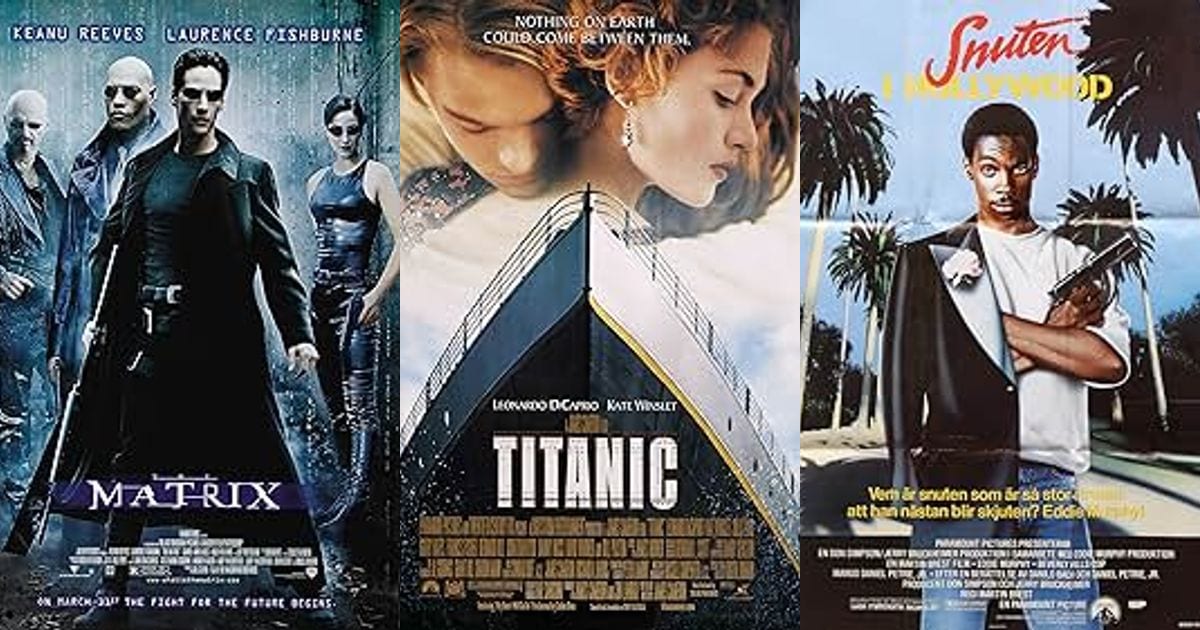
The Role That Almost Wasn't
Here's an unsettling thought to sit with: the movies you consider untouchable, the performances that feel like they were carved out of marble and handed down from the cinema gods, very nearly didn't happen the way you remember them. A scheduling conflict here, a nervous agent there, an actor chasing a different paycheck at exactly the wrong moment — and suddenly the role that defined a career goes to someone else entirely, or almost does.
These aren't rumors or internet legends. They're well-documented, thoroughly reported swaps that happened in the messy, human, last-minute way that real filmmaking actually works. Some of these near-casting decisions were confirmed contracts undone by bad timing. Others were flat-out rejections from actors who would go on to regret it publicly for decades. All of them make you wonder just how different film history could have looked. Let's play the alternate-universe game.
Tom Selleck Was Supposed to Crack the Whip First
Before Harrison Ford ever picked up a bullwhip and fedora, Steven Spielberg and George Lucas had somebody else entirely in mind for Indiana Jones: Tom Selleck. At the time, Selleck was a working actor who hadn't yet become a household name, and the Raiders of the Lost Ark team liked him enough to actually cast him. Paperwork was signed. The role was his.
Then CBS said no. Selleck was under contract for a new detective show called Magnum, P.I., and the network refused to release him from his obligations, even temporarily, to shoot a movie. It's the kind of scheduling collision that sounds like a screenwriter's invention, except it's simply what happened. Selleck lost Indiana Jones, and the part went back to Ford, who Spielberg and Lucas already knew well from Star Wars and had considered before landing on Selleck in the first place.
The irony is almost too neat: Magnum, P.I. became a hit, so Selleck's career worked out fine. But imagine an Indiana Jones built on Selleck's easy, mustachioed charm instead of Ford's grizzled, wounded-hero energy. The whole tone of the franchise, the wisecracks, the way Indy takes a punch and keeps going — all of it would have landed differently with a different leading man carrying the whip.
Will Smith Chose the Wild West Over the Matrix
In the late '90s, Will Smith was the biggest movie star on the planet, fresh off Independence Day and Men in Black, and the Wachowskis wanted him to play Neo in The Matrix. Smith has talked openly, in multiple interviews over the years, about turning the role down — and about the reasoning that seemed sound at the time but turned out to be a historic miscalculation. He didn't fully grasp the script's bullet-time, red-pill-blue-pill concept when the Wachowskis pitched it, and he chose to instead star in Wild Wild West, a big-budget summer spectacle that seemed like the safer, splashier bet.
Wild Wild West flopped, both critically and in the cultural memory. The Matrix, meanwhile, went to Keanu Reeves and became one of the most influential science-fiction films ever made, reshaping action choreography and visual effects for a generation. Smith has since said, with good humor, that Reeves was simply better suited to Neo's quiet, searching stillness than the charismatic, joke-cracking energy Smith brings to every role. It's a rare case of an actor being remarkably gracious about a decision that cost him one of the defining roles of the era.
Molly Ringwald Said No to Pretty Woman
Before Julia Roberts turned Vivian Ward into a career-making, Oscar-nominated star turn, the script for Pretty Woman made its way to Molly Ringwald, the reigning queen of teen movies thanks to Sixteen Candles, The Breakfast Club, and Pretty in Pink. Ringwald passed. She has said in later interviews that she found the material — which started life as a much darker script about sex work before Disney's Touchstone Pictures softened it into a glossy romantic comedy — uncomfortable, and it didn't align with the direction she wanted her career to go.
It's easy to forget now, given how thoroughly the film belongs to Roberts, that Pretty Woman was originally shopped around as a grittier story before being reworked into the fairy-tale rom-com that became a cultural phenomenon. Roberts brought a warmth and comic timing to Vivian that turned the film into the blueprint for a decade of romantic comedies, and it's the role that made her a movie star. Ringwald, for her part, has never expressed deep regret publicly — her career simply went in a different direction — but it's a fascinating what-if all the same, one where a single pass reshaped which actress became the defining rom-com lead of the 1990s.
Michael J. Fox Wasn't the First Marty McFly
This one's a genuine production-halting near-disaster. When Back to the Future started shooting in 1985, Marty McFly was being played by Eric Stoltz, an accomplished young actor who director Robert Zemeckis and producer Steven Spielberg had cast after their first choice, Michael J. Fox, was unavailable due to his commitment to the sitcom Family Ties. Stoltz filmed for several weeks — reportedly around five — before Zemeckis and Spielberg made an agonizing call: Stoltz's more brooding, dramatic approach wasn't landing the comedy the film needed, and they fired him.
They went back to Fox, who this time was able to work out an arrangement to film Back to the Future during the day and shoot Family Ties in the evenings and on weekends, running himself ragged for months in the process. Almost the entire film had to be reshot with Fox in the role. It's one of the most expensive and dramatic actor swaps in Hollywood history, and it's hard to imagine the movie working at all without Fox's manic, wide-eyed energy driving every scene. Stoltz went on to have a solid, respected career, but Marty McFly clearly needed exactly the kind of live-wire comic instincts Fox brought to the DeLorean.
Fun fact: Forrest Gump very nearly starred John Travolta, who turned the role down to make the notorious flop Look Who's Talking Now instead — reportedly one of the decisions he's most publicly kicked himself over. Tom Hanks took the role and won his second consecutive Best Actor Oscar for it.
John Travolta Passed on a Box of Chocolates
Speaking of Forrest Gump — the role's journey to Tom Hanks is a near-miss story all its own. Before Hanks ever sat on that bench, the script made the rounds to several other big names, and John Travolta was among those who turned it down. Travolta has since called it one of the biggest regrets of his career, telling interviewers flatly that saying no to Forrest Gump was a mistake. Hanks took the role and delivered a performance so gentle and specific that it's now impossible to picture anyone else drawling "life is like a box of chocolates" with quite the same sincerity.
Hanks won the Academy Award for Best Actor for the role, his second in a row after Philadelphia, a feat only a handful of actors have ever accomplished. It's worth pausing on how different the film's tone would have been with a different lead — Forrest's naivety and warmth depend entirely on an actor willing to underplay every moment rather than perform it, and that restraint became one of Hanks's defining trademarks.
Viggo Mortensen Rode In at the Last Possible Minute
Of all the entries on this list, the Lord of the Rings swap might be the most nerve-racking, because it happened after filming had already started. Stuart Townsend was cast as Aragorn and had been rehearsing and preparing with the rest of the cast in New Zealand. Then director Peter Jackson made the decision to recast the role, reportedly feeling that Townsend, in his twenties at the time, read as too young to convincingly play a weathered ranger meant to seem decades older than the hobbits he's guiding.
Jackson needed a replacement immediately, with cameras essentially ready to roll on an enormous, multi-year production shooting three films simultaneously. Viggo Mortensen, on the recommendation of his son (who was reportedly a fan of the books), agreed to take the role and flew to New Zealand almost immediately, arriving on set within days and doing much of his own stunt and horseback work from the very start. It is genuinely difficult to imagine anyone else carrying Aragorn's arc from grim, reluctant ranger to crowned king across three sprawling films — Mortensen's weathered intensity became inseparable from the character. It's a testament to how much a last-second casting change, made under enormous pressure, can still produce something that feels inevitable in hindsight.
Ranking the What-Ifs
Every one of these stories raises the same delicious question: which swap actually mattered most? Was it the Indiana Jones near-miss, where a network contract dispute quietly rerouted an entire franchise? Or the Matrix pivot, where one actor's gut instinct about a strange script handed stardom to someone else? If you like putting these kinds of debates into some kind of order rather than just arguing about them at a bar, that's exactly the itch our Rank Master game is built to scratch — it's all about sorting and ranking exactly this kind of pop-culture trivia, from most consequential casting swap to most "wait, really?" surprise, and seeing how your gut instincts stack up against everyone else's.
What's striking, looking at all these stories side by side, is how rarely the "original" choice was a bad actor or a bad idea on paper. Tom Selleck would probably have made a perfectly charming Indiana Jones. Molly Ringwald had every right to be wary of Pretty Woman's murkier early drafts. Eric Stoltz is, by any account, a serious and talented performer. These weren't casting mistakes so much as casting mismatches — moments where the timing, the tone, or the chemistry just didn't line up, and where the eventual replacement happened to fit the role so precisely that it now feels like it was always meant to be.
Why These Almosts Still Fascinate Us
Part of what makes this trivia so endlessly shareable is that it forces you to hold two contradictory ideas at once: that these films feel inevitable, permanently fixed in the culture exactly as they are, and also that they were one contract negotiation away from being completely different objects. Harrison Ford's Indiana Jones, Keanu Reeves's Neo, Julia Roberts's Vivian Ward, Michael J. Fox's Marty McFly, Tom Hanks's Forrest Gump, Viggo Mortensen's Aragorn — these aren't just performances, they're the reason the characters work at all. Swap any one of them out, even for another perfectly good actor, and you'd get a fundamentally different movie.
So the next time someone tells you a classic film "cast itself," remind them it's rarely that simple. Somewhere behind almost every iconic role is a fired actor, a passed-on script, or a network executive who wouldn't budge — and a replacement who happened to be exactly right. That gap between almost and actual is where a lot of movie magic quietly gets made, one lucky, chaotic casting decision at a time.
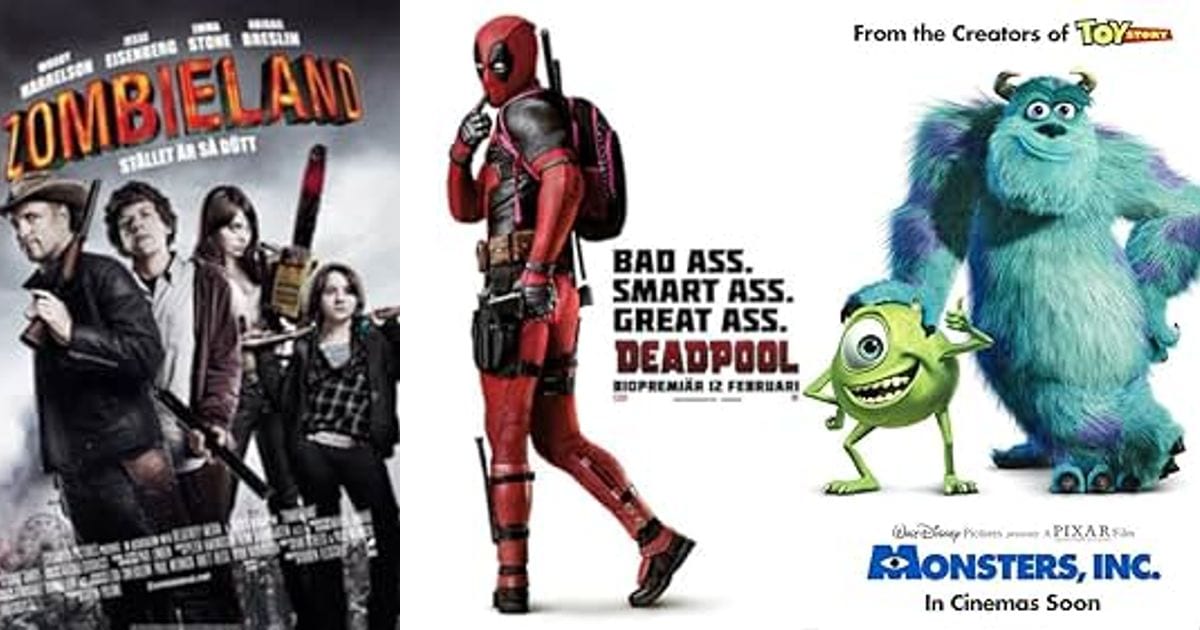
The Weirdest Celebrity Cameos You Completely Forgot Were in These Movies
From Hitchcock sneaking into his own films to Tom Cruise vanishing under prosthetics, here are the real, documented celebrity cameos so blink-and-you-miss-it that even devoted fans forget they happened.
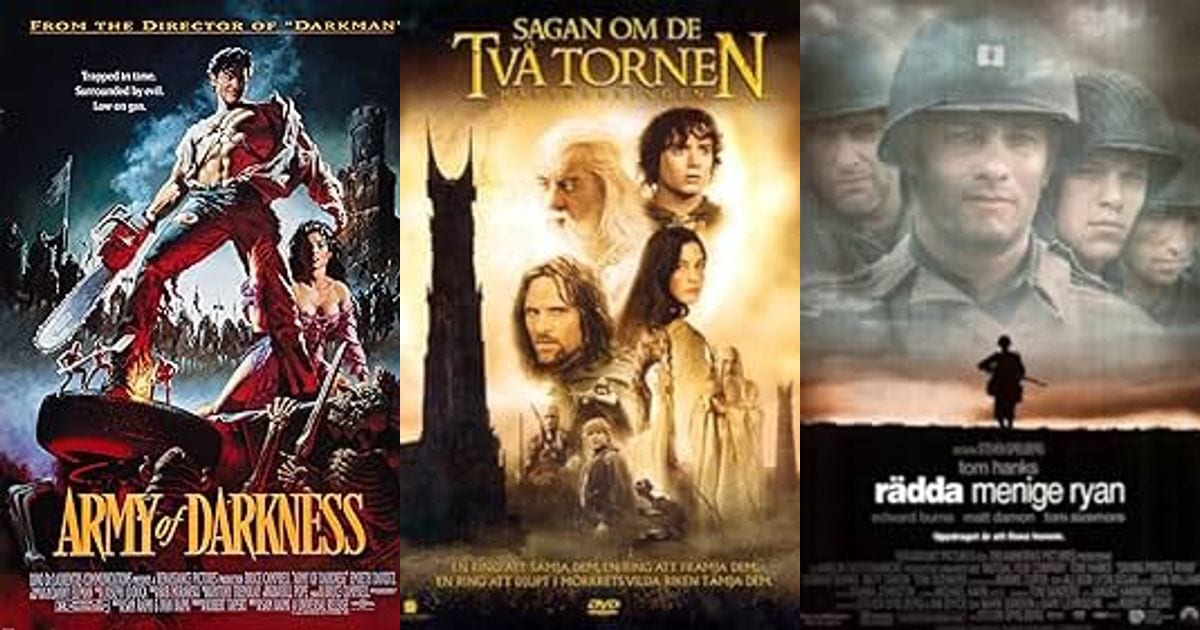
The Most Ridiculous Movie Taglines Hollywood Ever Approved
From sharks with grudges to sequels that admit they're not on a bus anymore, we rank the movie taglines so absurd they looped back around to genius — plus the rare ones that actually nailed it.
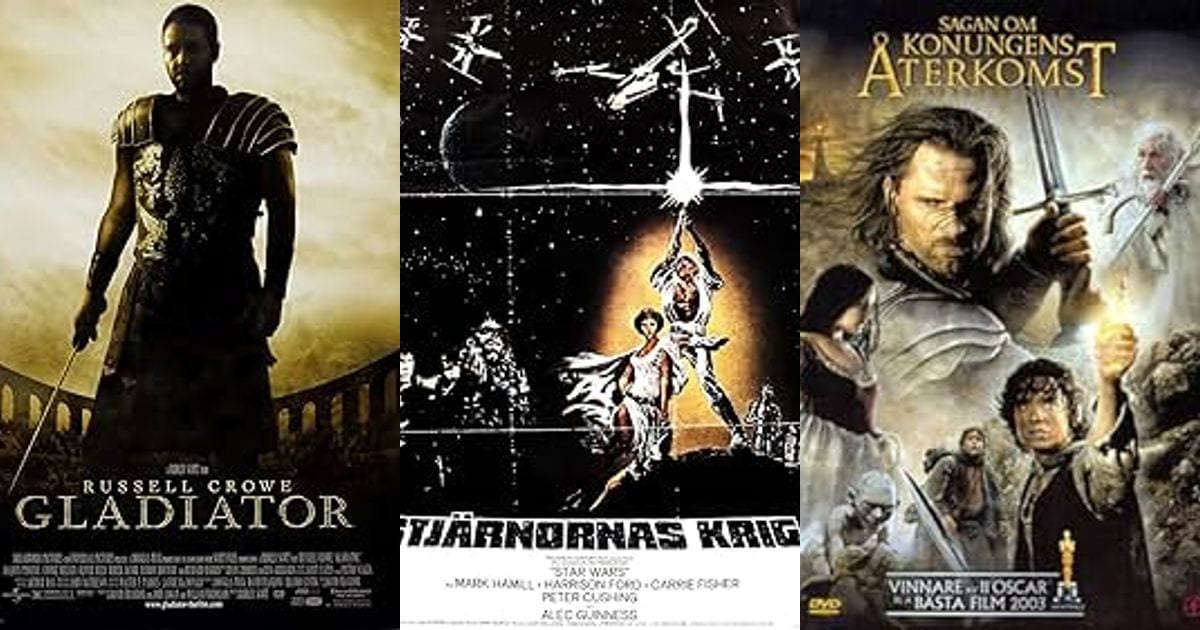
Movie Continuity Errors So Good They Became Legendary
From Pulp Fiction's shape-shifting wallet to Braveheart's time-traveling extras, some movie mistakes are so beloved that fans wouldn't dream of fixing them. Here's why continuity errors happen, and the famous ones we can't stop talking about.